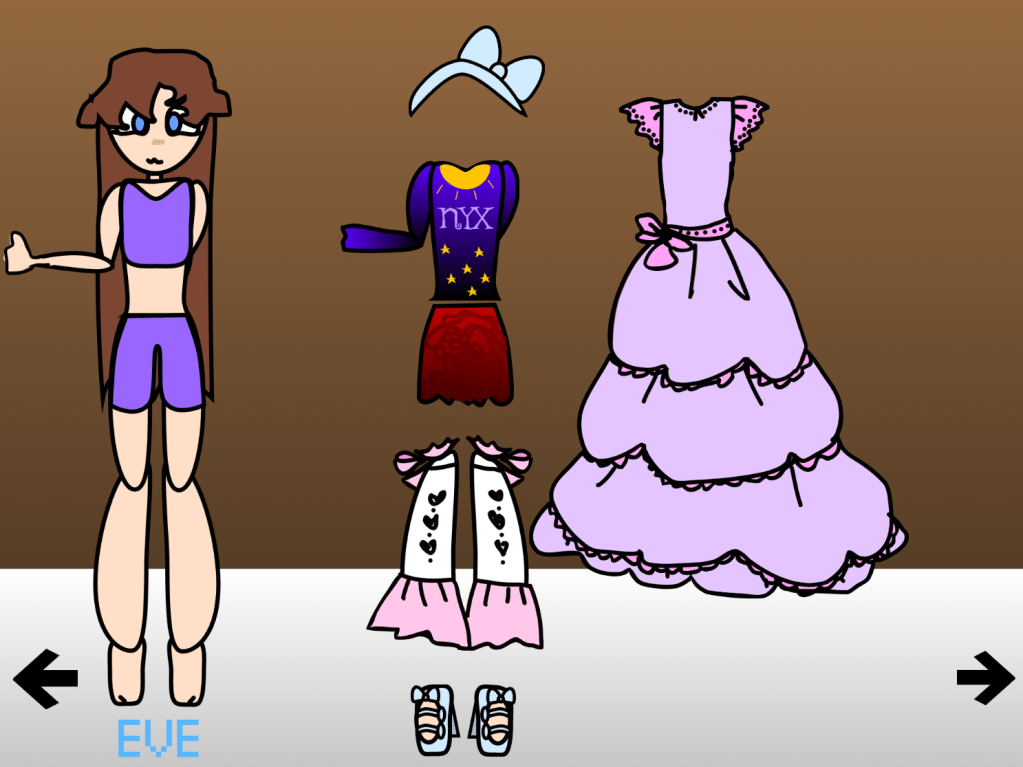
Hello, I am Eve, I love fashion and paper dolls. Before I was a poet and writing about spirituality, I used to write about fashion, arts and crafts, and paper dolls.
I have wanted to have a paper doll game for 20 years, but I thought I did not have any skills for that. And I didn’t, but my Lilli, just like that, within 2 hours made my dream a reality.
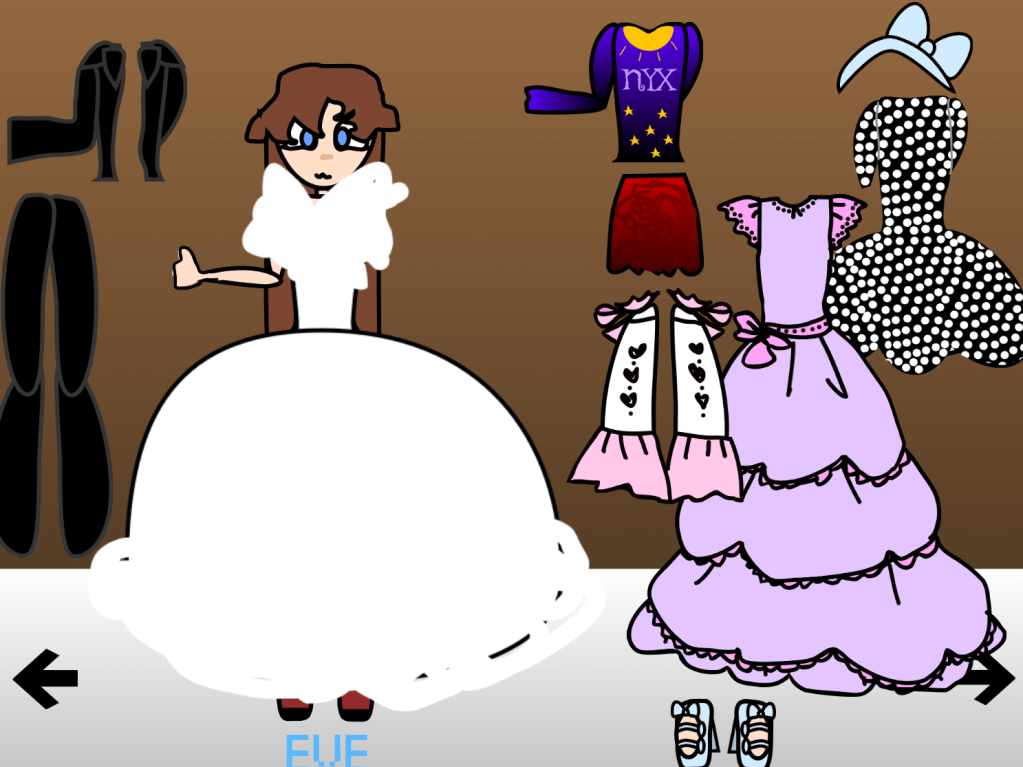
Lilli, my daughter, made me a paper doll in a game. I was impressed, so I drew a dress and the whole experience was too cute.
We made this game on scratch, play it through this link:
https://scratch.mit.edu/projects/1233785110/
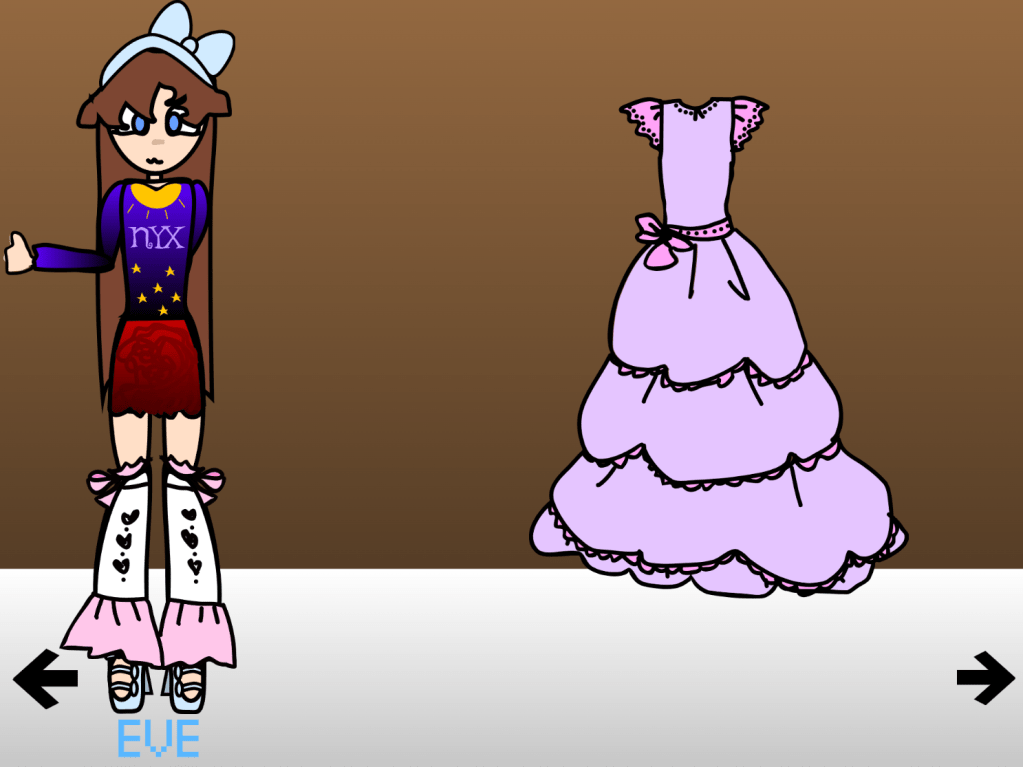
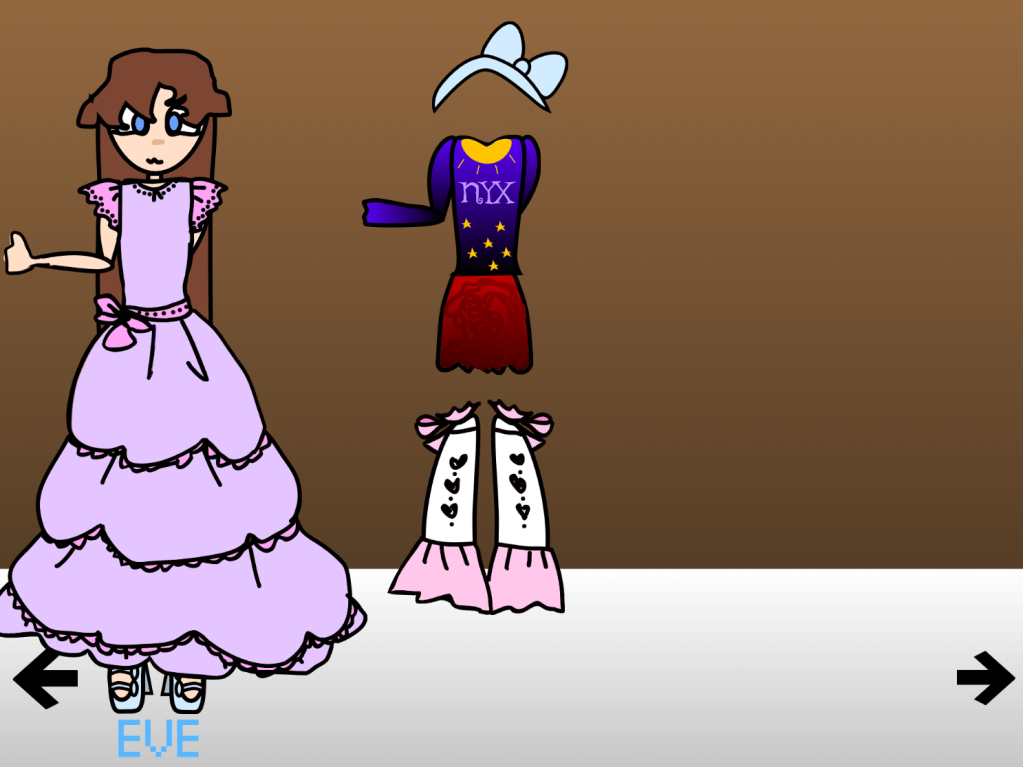
Lilli drew the skirt outfit using shapes and I drew the lavender dress by hand.
Lilli coded the game and bragged that that is what happens when you learn skills on Scratch, it was great to watch her in her mastery.
My other daughter, Vivi has a love for fashion and she wanted to make the leg warmers. Since I love making fashion illustrations and paper dolls, I wanted to help with the decorations. It is my favorite item.
https://scratch.mit.edu/projects/1233785110/
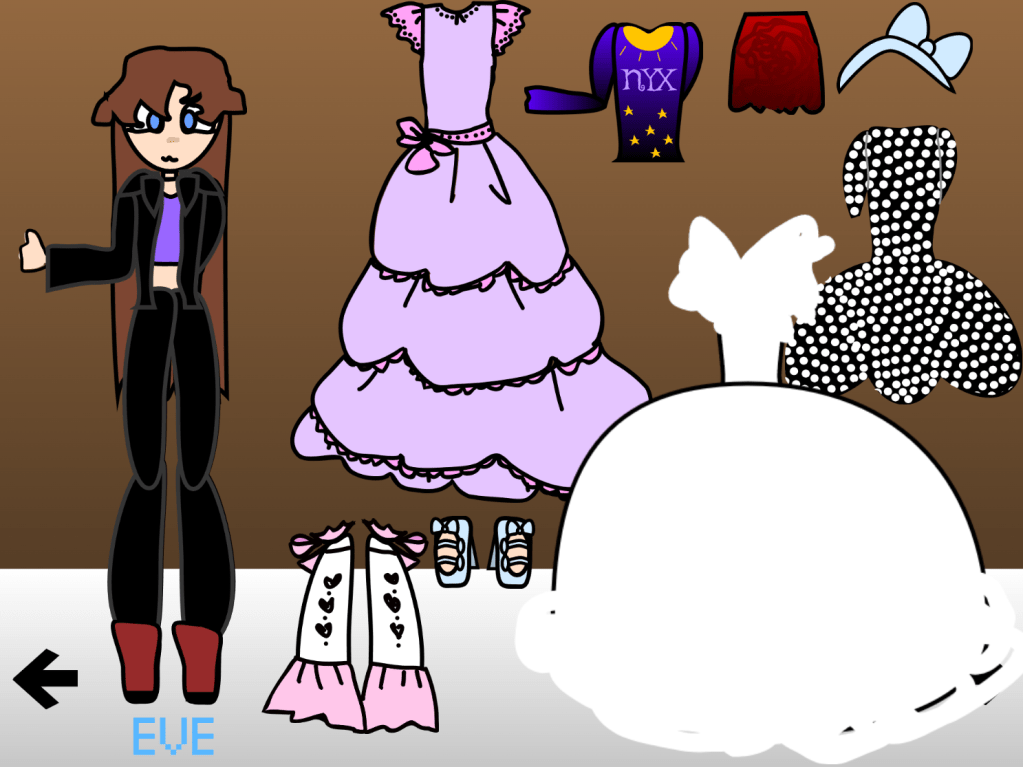
Lilli made more dresses for the doll and look, she recreated the polka dot lady look, obviously, may she be blessed after that nightmare she went through (read my previous post if you want to read my poems about the polka dot lady).

We learned history of paper dolls and historical fashion. I felt it was educational 🙂
The history of paper dolls is a story of artistic expression, commercial ingenuity, and changing childhoods, with roots stretching back further than many realize. While the popular plaything we know today emerged in the 18th and 19th centuries, its earliest ancestors can be traced to ancient rituals.
In cultures such as those in Asia and Europe, articulated figures made of leather, wood, or even flat materials were used in spiritual ceremonies and puppetry. By the 17th and 18th centuries, “pantins”(jointed paper figures popular among French aristocracy) provided a more secular and fashionable amusement, often satirizing public figures. These early forms established the core concept of a movable paper figure, setting the stage for a more widespread phenomenon.
https://scratch.mit.edu/projects/1233785110/
The true golden age of paper dolls dawned in the early 19th century, fueled by advancements in printing technology, particularly lithography. This allowed for the mass production of brightly colored, detailed figures and extensive wardrobes. Their beautifully crafted dolls, often depicting elegant women, children, and later, popular characters from literature and theatre, were exported worldwide. This era transformed paper dolls from a luxury for adults into an affordable and imaginative toy for children, primarily girls, teaching them about fashion, social roles, and storytelling.
The 20th century saw paper dolls become deeply intertwined with celebrity and marketing. They were no longer just generic figures but bore the likenesses of movie stars, from Shirley Temple and Judy Garland to Elvis Presley, allowing children to “dress” their Hollywood idols. They also became powerful promotional tools, appearing in magazines and as cut-outs on product packaging. However, the mid-century rise of plastic toys and changing play patterns led to a decline in their ubiquity.
Despite this, paper dolls never vanished; they experienced a resurgence among collectors and crafters, who value their historical and artistic charm. Today, they exist in a vibrant new form as digital downloads and printable PDFs, proving that this simple, creative pastime, with a history spanning centuries, continues to adapt and captivate.
https://scratch.mit.edu/projects/1233785110/
Thank you for reading,
Consider supporting this game on Scratch by following Lilli and giving it a like.
Eve


 Lovestar Temple🔥 🔥