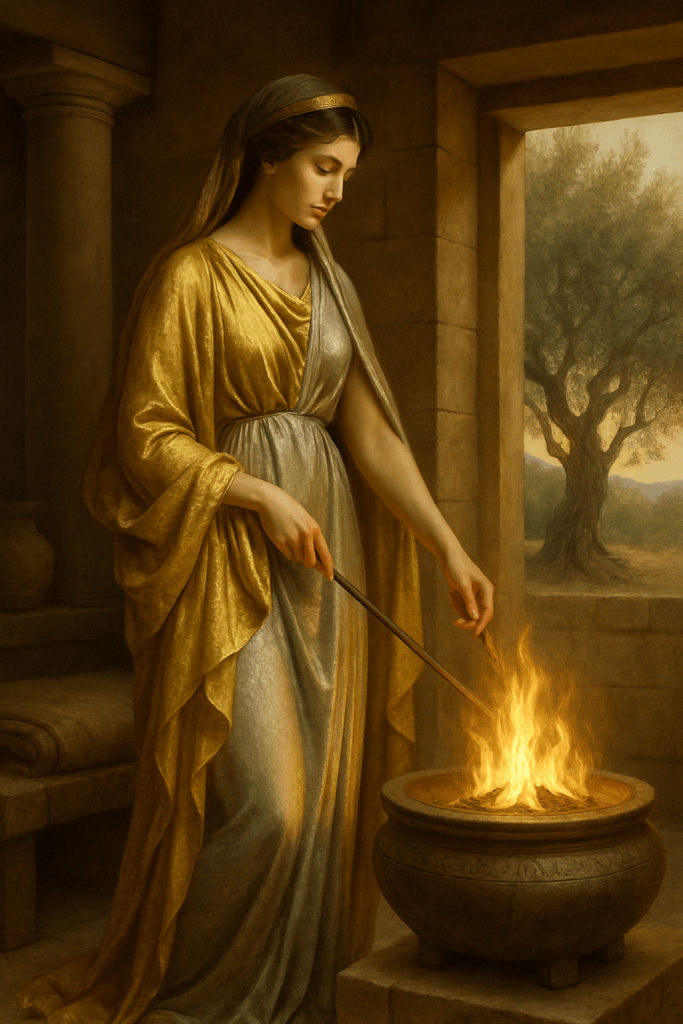
In the tumultuous world of Greek mythology, one deity embodied a quiet, constant peace: Hestia. The firstborn of Cronus and Rhea, Hestia was the goddess of the Hearth, Home, and Domestic Harmony. While she relinquished her seat on Olympus for Dionysus, her importance was never diminished. She must be good for poetry and messages.
Hestia’s presence was the fire at the center of the home, the sacred flame in the city’s public hearth (prytaneum), and the heart of family and community life. She received the first offering at every sacrifice, a testament to her foundational role.
Unlike other gods, Hestia had no dramatic myths of love, war, or revenge. She was a virgin goddess who chose a life of serene stability. Her power was not in thunderbolts or tridents, but in the warmth of the fire, the safety of the household, and the bonds of kinship. In a world of chaos, Hestia was the center of calm.
Next, we’ll meet a god who is the polar opposite of Hestia’s calm: the ecstatic and chaotic Dionysus!
Become a member on Patreon where I tell you what I learn about the goddesses for free. I also offer goddess devotional content behind the paywall for my safety.
While the Greek gods often command the spotlight, the goddesses were the true architects of destiny, wielding power that shaped everything from the harvest to the human soul. They were far more than just consorts and mothers; they were warriors, queens, scholars, and hunters. Today, we celebrate the might and complexity of the Olympian goddesses.
Hera, the Queen of Olympus, was a force to be reckoned with, embodying the sanctity and struggles of marriage. Demeter’s grief could halt the seasons themselves, showing the profound connection between divine emotion and the natural world. Aphrodite wielded love and desire as a universal, unstoppable power, influencing both gods and mortals alike.
Then there were the virgin goddesses, who claimed autonomy over their own bodies and domains. Athena, born from Zeus’s head, was the patron of wisdom, strategic war, and civilization. Artemis, the fierce huntress, roamed the wilds with her nymphs, protector of young women and the untamed earth. Hestia, though she gave up her throne, was the gentle, essential heart of every home and city.
These goddesses, along with chthonic (underworld) powers like Persephone and Hekate, present a complete picture of female divinity—one of strength, intelligence, and immense influence.
Next time, we’ll step away from the drama of Olympus to meet the gentle and essential Hestia.
What is premium content on my Patreon is goddess devotion, so you can read everything I am learning about goddesses, and I did decide to create a thing about as many gods as I can, but as you know, I love the goddesses, not the gods.
The 12 Olympians: The A-List of Ancient Greece
When we hear names like Zeus, Athena, or Apollo, we often picture majestic marble statues or dramatic scenes from movies. But for the ancient Greeks, these gods were the fundamental forces that shaped their world, their culture, and their understanding of life itself. They were a complex family of immortals, each with their own domain, personality, and flaws, reflecting the full spectrum of human experience.
Today, we’re starting a journey to meet the Olympians, the divine rulers who called Mount Olympus their home.
Where Did the Gods Come From? It All Started with Chaos
Before the familiar gods of Olympus, there was only Chaos—a void of nothingness. From Chaos emerged the first primordial deities, including Gaia (Earth) and Ouranos (Sky). Their union created the Titans, the first rulers of the cosmos.
The most important Titan, Cronus, overthrew his father Ouranos. Fearing a prophecy that he too would be overthrown by his own child, Cronus swallowed each of his children at birth. His wife, Rhea, desperate to save her youngest, Zeus, tricked Cronus by giving him a stone wrapped in swaddling clothes. The infant Zeus was hidden away and raised in secret.
When he came of age, Zeus forced Cronus to disgorge his siblings: Hestia, Demeter, Hera, Hades, and Poseidon. What followed was a cataclysmic war known as the Titanomachy, where Zeus and his siblings fought the Titans for supremacy. Victorious, the three brothers drew lots to divide the world:
Zeus: King of the Gods and ruler of the Sky.
Poseidon: God of the Seas, Earthquakes, and Horses.
Hades: God of the Underworld and ruler of the Dead.
With the cosmos divided, a new era began—the age of the Olympian Gods.
The 12 Olympians: The A-List of Ancient Greece
While the number sometimes varies, the canonical Twelve Olympians were the principal deities of the Greek pantheon. They were not distant, all-powerful beings; they were passionate, jealous, generous, and vengeful.
Here is a quick introduction to the core twelve:
Zeus: The ruler of the gods, god of the sky, lightning, thunder, law, and order. His weapon is the thunderbolt.
Hera: The queen of the gods, goddess of marriage, women, and family. She was both the wife and sister of Zeus.
Poseidon: God of the sea, rivers, floods, droughts, and earthquakes. His symbol is the mighty trident.
Demeter: Goddess of the harvest, agriculture, and the sacred law of the cycle of life and death.
Athena: Goddess of wisdom, handicraft, and strategic warfare. She was born, fully armed, from Zeus’s forehead.
Apollo: God of light, the sun, prophecy, philosophy, archery, medicine, music, and poetry.
Artemis: Goddess of the hunt, the wilderness, wild animals, the moon, and chastity. Apollo’s twin sister.
Ares: God of war, specifically the violent and brutal aspects of battle.
Aphrodite: Goddess of love, beauty, pleasure, and procreation. She was born from the sea foam.
Hephaestus: The master blacksmith and craftsman of the gods, god of fire, metalworking, and sculpture.
Hermes: The messenger of the gods, god of trade, thieves, travelers, sports, and border crossings.
Dionysus: The youngest Olympian, god of wine, viticulture, fertility, ritual madness, and religious ecstasy.
(Hades, while a major god, did not reside on Mount Olympus and is typically not counted among the Twelve. Hestia, the original Olympian of the hearth, gave up her seat to Dionysus to maintain peace.)
The Greek gods are timeless because they are so profoundly human. Their myths are not just entertaining stories; they are archetypal narratives that explore love, loss, ambition, jealousy, and the struggle for power. They were used to explain natural phenomena (why the seasons change, why volcanoes erupt) and to teach moral and social lessons.
From Renaissance art to modern-day psychology (think “Oedipus Complex” or “Narcissism”), the legacy of these deities is woven into the very fabric of Western civilization.
In our next post, we’ll dive deeper into the tumultuous life of the King of the Gods himself: Zeus! We’ll explore his many loves, his powerful children, and why he was both revered and feared.
Want to Dive Deeper? Here are some excellent resources for further research:
Theoi Greek Mythology: An extensive and meticulously researched resource on the gods, spirits, and creatures of Greek mythology, complete with original texts.
When we hear names like Zeus, Athena, or Apollo, we often picture majestic marble statues or dramatic scenes from movies. But for the ancient Greeks, these gods were the fundamental forces that shaped their world, their culture, and their understanding of life itself. They were a complex family of immortals, each with their own domain, personality, and flaws, reflecting the full spectrum of human experience.
Today, we’re starting a journey to meet the Olympians, the divine rulers who called Mount Olympus their home.
Where Did the Gods Come From? It All Started with Chaos
Before the familiar gods of Olympus, there was only Chaos.
From Chaos emerged the first primordial deities, including Gaia (Earth) and Ouranos (Sky). Their union created the Titans, the first rulers of the cosmos.
The most important Titan, Cronus, overthrew his father Ouranos. Fearing a prophecy that he too would be overthrown by his own child, Cronus swallowed each of his children at birth. His wife, Rhea, desperate to save her youngest, Zeus, tricked Cronus by giving him a stone wrapped in swaddling clothes. The infant Zeus was hidden away and raised in secret.
When he came of age, Zeus forced Cronus to disgorge his siblings: Hestia, Demeter, Hera, Hades, and Poseidon. What followed was a cataclysmic war known as the Titanomachy, where Zeus and his siblings fought the Titans for supremacy. Victorious, the three brothers drew lots to divide the world:
Zeus: King of the Gods and ruler of the Sky.
Poseidon: God of the Seas, Earthquakes, and Horses.
Hades: God of the Underworld and ruler of the Dead.
With the cosmos divided, a new era began, the age of the Olympian Gods.
Want to Dive Deeper? Here are some excellent resources for further research:
Theoi Greek Mythology: An extensive and meticulously researched resource on the gods, spirits, and creatures of Greek mythology, complete with original texts.
The air turns cool, the leaves begin their golden fall, and the veil of the world grows thin. This is the season when Persephone descends into the Underworld: not as a victim, but as a queen returning to her throne. Her story is one of cycles: light and dark, innocence and wisdom, life and death and she invites us to walk beside her as we, too, turn inward for the winter.
Persephone’s descent is not an ending: it is a transformation. When she steps beneath the earth, the world above grows quiet so that we can listen. She teaches that every soul must descend at times to face what lies beneath the surface, to find beauty even in shadow, to trust that spring will return.
If these messages serve you, consider following me on Ko-fi for divinations articles and readings (free and daily) and premium weekly/ monthly messages.
I have a goal to create my own tarot deck, and you can help me reach this goal through this link:
Below are 8 messages from Persephone, to guide your spirit as the world slips into the deep stillness of the dark months.
1. The Descent Is Sacred
Do not fear your descent (the moments when life feels quiet, uncertain, or heavy). Every cycle of growth begins in darkness: like a seed beneath the soil.
2. You Are Both Light and Shadow
You are not meant to choose between the two. Balance is found in embracing both the radiance and the mystery within you.
3. Transformation Is Not Gentle
Growth often asks for surrender. When you feel undone, remember that you are being reshaped into something stronger.
4. Rest Is a Ritual
Nature rests now: so must you. Stillness is not laziness, it is preparation. The body and soul both need time to regenerate.
5. Remember Your Power
In myth, Persephone returns each year crowned as Queen. Let that remind you: what once felt like loss can become sovereignty when you own your story.
6. Honor the Ancestors
This is the time to speak their names (to remember where you come from, to let gratitude heal what history has broken).
7. The Darkness Is a Teacher
Do not run from it. The shadows you face are not punishments; they are invitations to wisdom.
8. Spring Awaits, But Not Yet. First, we must face the cold snow.
Be patient. The seeds of your renewal are growing quietly beneath the surface. Trust that your light will rise again in its own perfect time.
As Persephone descends, so do we: into reflection, into silence, into depth. This is the season to honor endings and embrace stillness, to let go of what no longer serves and prepare for what will bloom again.
Light your candle, whisper her name, and remember: descent is not defeat. It is initiation.
This comes from TikTok. Follow my channel @evelovestar called Goddesses & Sirens
Temple of Aphrodite poem ~ this poem inspired the Temple of Aphrodite multiple chapter story. Written by Eve Lovestar, inspired by her muse Aphrodite, designed on Canva with a Canva background of a maiden’s column temple ruins. I thought this image very fitting to be a Temple of Aphrodite. I have to find images of the actual Temple of Aphrodite ruins.
The events described on my Temple of Aphrodite story describe the long form of this poem in a lot less crude manner.
I have a secret-ish Patreon channel I have been working on for some time where I share my secret poetry and articles. I will be releasing my Temple of Aphrodite story here:
https://www.patreon.com/c/HerTempleRead on Patreon (including free articles and secret poems) My Patreon channel is called Temple of Aphrodite.
I wrote a very complex, long, and cool (secret) Temple of Aphrodite story. It is still unreleased (I write so much using speech to text tools and because muses tell me these stories and poems, included Aphrodite. I know I must include Aphrodite in my brand-new Persephone story.
I can see the Persephone story going in two directions, a general retelling of the myth as well as something darker and more interesting for those of us who are tired of “normal” romance who can handle the intensity of intimacy in the underworld. The second story will be in Patreon eventually.
You could imagine that the Temple of Aphrodite story is quite interesting and secret for a reason. The story imagines the events that might have happened in a Temple of Aphrodite and explain their magic rituals in detail: the main characters are priestesses, the priest, and the temple guard.
Aphrodite stars in the story with her high priestess and priest.
I will be telling you more about it on Patreon only because it is not for everyone.
If you are not curious about what I saw happening in the ancient Temple of Aphrodite, then do not click on this link that would take you to my Temple of Aphrodite channel where you would experience and alternate world where love and other lovely activities manifest magic.
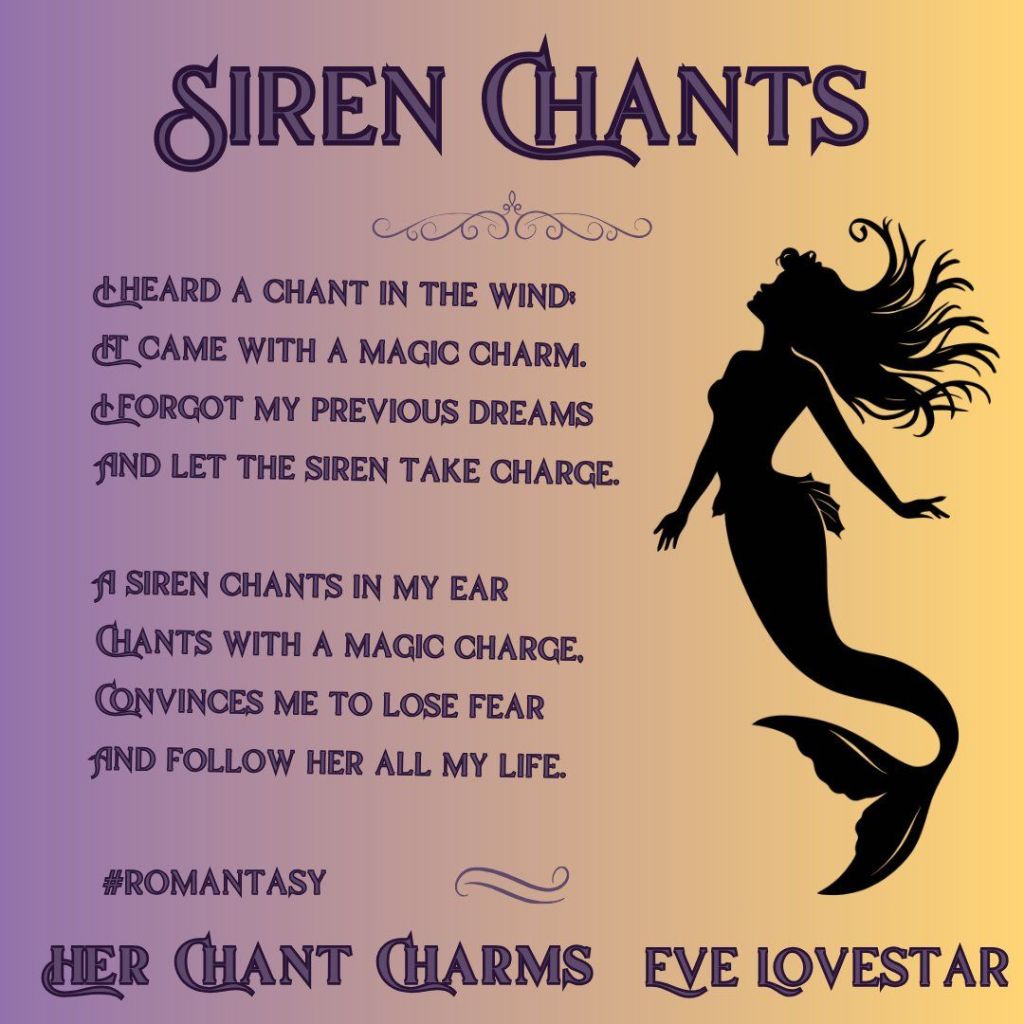
Siren Chants is Eve Lovestar’s long-term writing book project.
Dear Lovestar,
I have been offline so much because I have been writing fated love romance stories. 😍
In this new creative venture, I am bringing twin flame energy as the core of the romance novel.
Fated Love makes romance romantasy. Of course, I believe fated lovers are a real phenomenon.
Writing books takes a lot of time and effort, which is why I’m offline so much.
However, I have a new pen name Dawn Starr, it’s true, another name!!!
Dawn is an alternate me who writes historical fiction and romance. This is because I’m a huge history fan.
I self-published 2 books via Kindle with the pen name Dawn Starr. I have other 2 books I will publish, which I created and recorded, and I have Roman Myths I will be publishing as well.
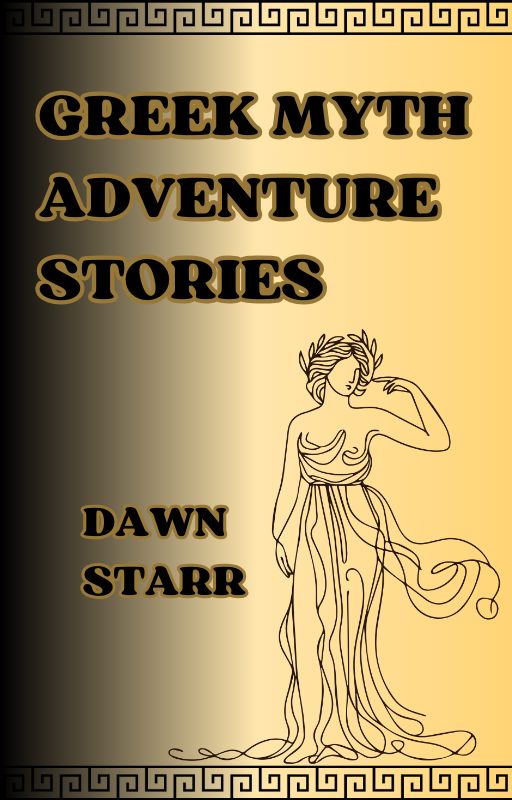
Greek Myth Adventure Stories
Greek Myth Adventure Stories: Your Myth Awaits
The greatest stories ever told have one thing missing: You.
What if you didn’t just read about the legends but you lived them? What if your choices could change fate?
This is your invitation to step into the sun-baked world of Greek myths. Become Medea’s trusted assistant, wielding magic beside her. Be the mortal who captures a Hercules’s heart. Be the healer or the storyteller whose words could save a hero.
One moment you’re reading, the next you’re deciding: do you face the Minotaur or flee?
Remember the adventure you were always meant to have. Your choices will rewrite legends.
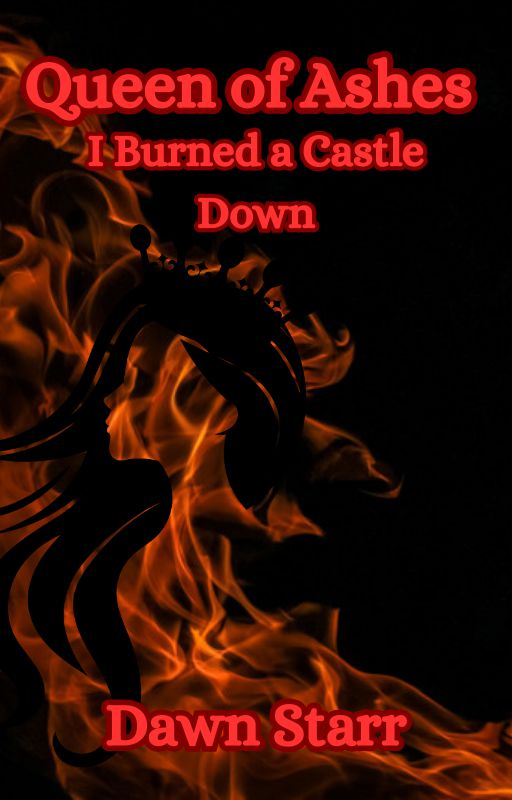
Queen of Ashes – I Burned a Castle Down: A Romantasy Novel of Dark Magic and Obsession.
A queen of fire rules a cursed island.
Once lush and free, the land now burns under her will, reshaped by shadow, sacrifice, and a magic she cannot stop wielding.
Haunted by a fierce love that once consumed her, she performs forbidden rites to summon Mael, the man who gave her the flames and vanished into another realm.
As blight spreads and whispers rise in her court, the queen clings to a single hope: his return.
But Mael’s reappearance is not salvation. It’s a reckoning. With him comes a secret that could unravel everything… or bind them forever.
Romantasy Storytelling
The romantasy storytelling is born out of my constant fantasies of twin flames and fate pertaining to love and union.
I have lived these stories. What this means is that these stories are created within my head, and I do not write them, I experience them.
My home is you. My only release Is with you. My peace comes Through you. I seek refuge In your arms. I touch you and I relax. My touch a tether To my safe place Which is you. I’m grounded In your Love.
Tethered
My home is you. My only release Is with you. My peace comes Through you. I seek refuge In your arms. I touch you and I relax. My touch a tether To my safe place Which is you. I'm grounded In your Love.#lovepoem#love#inlove#romance#relationships#lovelive#poetry
I was ashamed to show this poem because I didn’t like it. It lived in my Pinterest. I only kept it because of the illustration. With my new skills, I can do a better illustration today. I could also write a better poem, but I kind of like this one now. Yes, my cursive is way better, also, edging on calligraphy.
I would like to write a long thing today, but I can’t.
Here is an update:
I have been blogging about learning with my kids on my Home Education Situation blog, recently learning about Athena. Yes, it’s history 👏 🙌 👌
Collaboration with my daughter LilliLilli’s Athena. She got an A+ by writing ATHENA in capital Greek letters. I was impressed.
But also, I was rear-ended in traffic, and I’m injured, very stressed out, and I do not like to drive anymore 😕
And I have a lot of stuff going on.
I also figured a better way to teach my kids to multiply by skip counting. I will write about this on my learning blog.
This was nice. Let’s do this again.
If you can stand my poetry dumping, we can be friends, to be a part of this journal, comment, and let me know what poetry (and topics) you would like to read.







 Lovestar Temple🔥 🔥