Dear Lovestar,
Continuing yesterday’s conversation here.
You know I’m a romantic, and I bet you’re a romantic (unless you’re here to be a critic). Welcome to this very romantic blog experience. My intention is to share my copious amount of romantic energy with the world, to make romance cool again, and to help people deepen their love connections using, you guessed it, ROMANCE!
https://loveandlight888.art.blog/?p=2737
What is romance? A feeling, an energy, and a verb
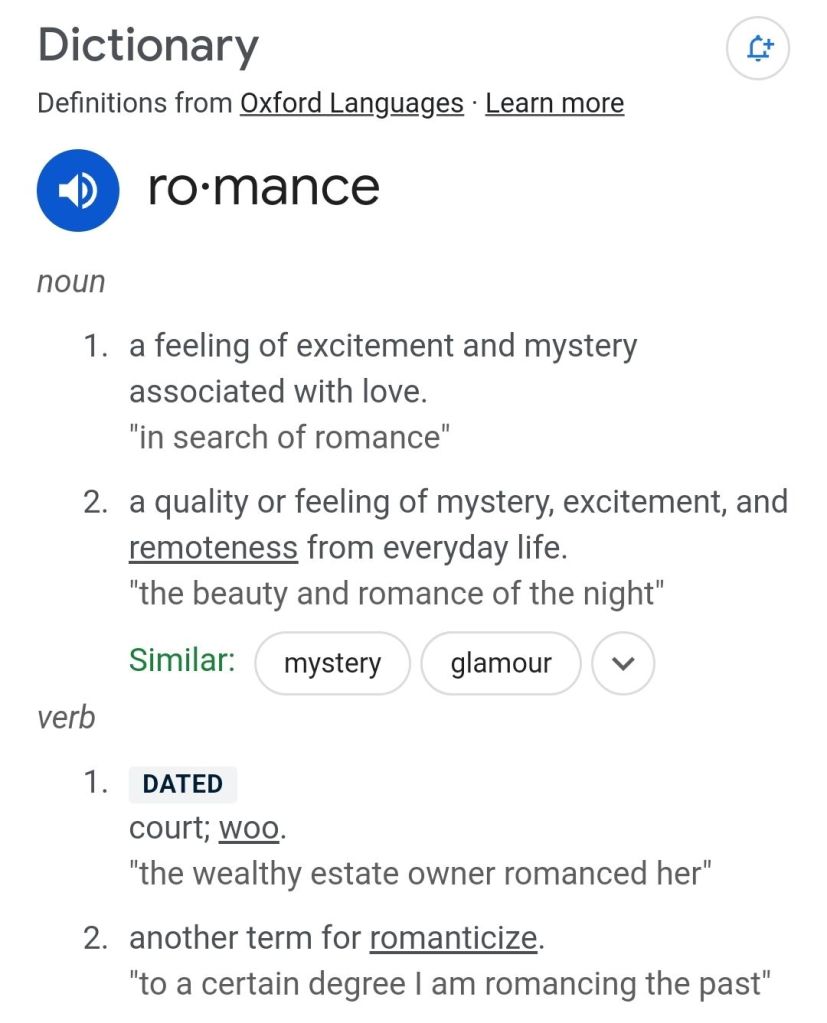
Romance is also an energy. Romance promotes positive vibes, happiness, and friendship. Romance is inspirational and motivational. Romance can deepen a love connection and enhances our creative expression.
Romance is also spiritual. It helps us be in the present as we feel sensations in our body and as we engage with a romantic partner. It can help connect us to our spirit and our beloved’s spirit. Through romance, we can make a connection to the universe or God.
Why are people not romantic today?
Such an excellent question, and I’m thinking of another question, were people ever romantic before? 🤔
Here is my intention: we become more romantic people and ascend love on the planet. I am doing my part. Will you join me in this romantic project?
There could be various reasons why some people aren’t interested in romance. It could be due to personal preferences, past experiences, focus on other priorities like career or personal development, or simply not feeling ready for it at the moment. Everyone’s preferences and priorities are different.
However, as I explored in my previous post on this subject, we can be romantic without a romantic partner. We can be romantic by and for ourselves. I have decided to romance myself.
Misconceptions about romance
Some misconceptions about romance and romanticism include:
1. **Romance is always grand gestures**: While grand gestures can be a part of romance, it’s often the small, everyday gestures of thoughtfulness and affection that sustain relationships.
2. **Romantic relationships are always easy and effortless**: In reality, relationships require effort, communication, and compromise from both partners.
3. **Romance is solely about passion and intensity**: While passion is important, lasting romance also involves companionship, trust, and emotional intimacy.
4. **Romance is only for young people**: People of all ages can experience and enjoy romance. Love and connection are not limited by age.
5. **Romance is only for beautiful, good looking, of attractive people**: this is what we see in movies. However, just like with age, this doesn’t apply. Romance is for anyone who wants to engage with love.
6. **Romance is always spontaneous**: While spontaneity can be exciting, planned romantic gestures or dates can be just as meaningful.
7. **Romance should always mirror what’s depicted in movies or books**: Real-life romance often looks different from what’s portrayed in media, and that’s perfectly normal. Each relationship is unique.
8. **Romance can fix all problems in a relationship**: While romance can strengthen a relationship, it’s not a solution for all problems. Communication and addressing underlying issues are crucial.
Understanding these misconceptions can help individuals have more realistic expectations and healthier attitudes towards romance and romantic relationships.
How can we make romance cool again?
Making romance “cool” again involves shifting societal perceptions and attitudes towards romance in a positive way. Here are some ways to do that:
1. **Celebrate diverse expressions of romance**: Recognize that romance can look different for everyone. Embrace and celebrate various forms of romantic expression, whether it’s through gestures, words, or actions.
2. **Promote healthy relationship dynamics**: Encourage open communication, respect, and kindness within relationships. Highlight the importance of mutual support, understanding, and compromise.
3. **Challenge stereotypes and misconceptions**: Address and debunk myths about romance and relationships. Encourage conversations that emphasize the complexity and depth of romantic connections.
4. **Showcase positive examples**: Highlight real-life examples of healthy, loving relationships in media, literature, and popular culture. Celebrate stories that depict authentic, respectful, and fulfilling romantic partnerships.
5. **Emphasize emotional intelligence**: Foster emotional intelligence and empathy, which are essential for building and maintaining strong romantic relationships. Encourage individuals to understand and express their emotions effectively.
6. **Promote self-love and self-care**: Remind people that self-love and self-care are fundamental aspects of healthy relationships. Encourage individuals to prioritize their own well-being and happiness.
7. **Encourage creativity and spontaneity**: Embrace creativity and spontaneity in romantic gestures and activities. Encourage people to think outside the box and tailor their expressions of romance to their unique preferences and personalities.
8. **Normalize vulnerability**: Create a culture where vulnerability is seen as a strength rather than a weakness. Encourage honest communication and the willingness to be emotionally vulnerable with partners.
By promoting these attitudes and behaviors, we can help make romance not only “cool” again but also healthy, fulfilling, and meaningful for individuals and society as a whole.
Was romance ever cool in the first place?
Yes, romance has been considered “cool” or culturally celebrated at various points in history and in different societies. Throughout literature, art, music, and cultural traditions, romance has often been idealized and romanticized as a source of beauty, passion, and inspiration. In many cultures, romantic gestures and expressions of love have been highly valued and admired.
For example, during the Romantic era in the late 18th and early 19th centuries, there was a widespread fascination with love, nature, and intense emotions. Romanticism, as an artistic and intellectual movement, celebrated individualism, imagination, and the power of the human spirit, often expressed through themes of love and longing.
Similarly, in modern times, romantic love has been a central theme in popular culture, with countless books, movies, songs, and other media dedicated to depicting romantic relationships and experiences. These portrayals have often contributed to the perception of romance as something desirable and aspirational.
Except now, there has been a darkening of this theme with free sex for all, threesomes and sexual perversion, porn, etc.
Of course, perceptions of romance can vary widely depending on cultural, societal, and individual factors. What is considered “cool” or celebrated in one context may not be the same in another. However, it’s fair to say that romance has held significance and cultural appeal for many people throughout history.
Dear friend, Thank you for engaging with me in this exploration of romance.
I pray that you received something useful from this.
We will discuss this topic again. At length.
As always, I intend to inspire you to be more romantic. Have I succeeded? Please let me know. I have many plans to inspire and motivate you to be more romantic and loving.
Do you have any tips to help make romance cool again? 😎 let’s do it together.
With love and light,
Eve, on a romantic mission
 Lovestar Temple🔥 🔥