These patterns guard our hearts but now repel what we crave. Recognize yours? Healing one unlocks waves of others.
Guarded Heart Block You shut down fast after hurt. Love feels risky, so walls rise. Dates fizzle from unspoken fear. Partners seem unavailable because you pull back first.
Prover Block You hustle to earn love. Over give, overperform, shape-shift. One-sided bonds drain you. Inner voice whispers “not enough” unless you do more.
Dimmer Switch Block Mute your intensity to fit. Hide big emotions, needs, desires. Surface connections feel safe but empty. True self stays dim, repelling bright matches.
Controller Block Grip tight from anxiety. Obsess over texts, replay words, check socials. Pursuit turns to doubt. Flow blocks when you try to force outcomes.
These are not flaws. They protected you once. Eclipse energy amplifies their release. Self-healing here magnetizes real love: mutual, effortless, whole.
5 Free Journaling Prompts to Begin
Spend 10 minutes total. Write raw. Feel shifts stir. This tastes the freedom ahead.
My top love block shows up daily as.
One old wound feeding this block happened when.
Without this pattern, a loving conversation sounds like.
I accept and release this block by affirming.
Today I invite love that feels.
The Healing Possible
Sisters, imagine waking without that chest knot. Texts flow easy. You speak needs without apology. Synchronicities bring aligned hearts. No more chasing or settling. Eclipse plus Venus unlocks this: healed patterns draw equals. 127 women shifted via lunar work. Yours next.
Claim Your Full Ritual (Premium Only)
Premium post delivers 10-minute rituals for your block. Eclipse-safe, spirit-guided, no manipulation. Burn shadows, seed freedom. Plus 10 deep journaling prompts per block.
Better: Join a Temple. Full Moon Temple or Aphrodite Temple which include this post, plus endless goddess rites, audios, council. Choose by theme. Moon for lunar/eclipses. Aphrodite for heart/devotion. Both weave rituals safely. Membership feeds your year, not one post.
Eclipse peaks soon. Start free journaling now. Upgrade for rituals that change 2026. Your heart temple awaits.
Join me on Patreon for the premium article that contains rituals, a quiz to determine your love block, and prayers to Venus here:
Men often resent Valentine’s Day with a quiet intensity that goes unspoken. It arrives like an ambush: a single day demanding grand gestures, expensive dinners, and proof of devotion on command. Society scripts it as a test of manhood, where love must be purchased in roses, jewelry, or reservations, all wrapped in pink perfection. Fail to deliver, and you risk sulking silence or accusations of neglect. Succeed, and it feels like checking a box rather than kindling a flame. The pressure is relentless: perform or be labeled uncaring, cheap, or worse. No wonder many men push back, seeing it as a commercial trap that reduces their year-round efforts to one high-stakes spotlight.
Their argument carries real wisdom: love should not be confined to February 14. True devotion shows in the unglamorous daily acts, the steady hand on a back during stress, the quiet listening after a long day, the choice to stay when it is easier to drift. Forcing romance into a 24-hour spectacle cheapens it, turning intimacy into obligation. Men intuitively grasp this. They build love through consistency, not calendars, and resent the implication that their ongoing presence means nothing without a receipt. This stance is not coldness. It is clarity: real union thrives on authenticity, not artificial deadlines.
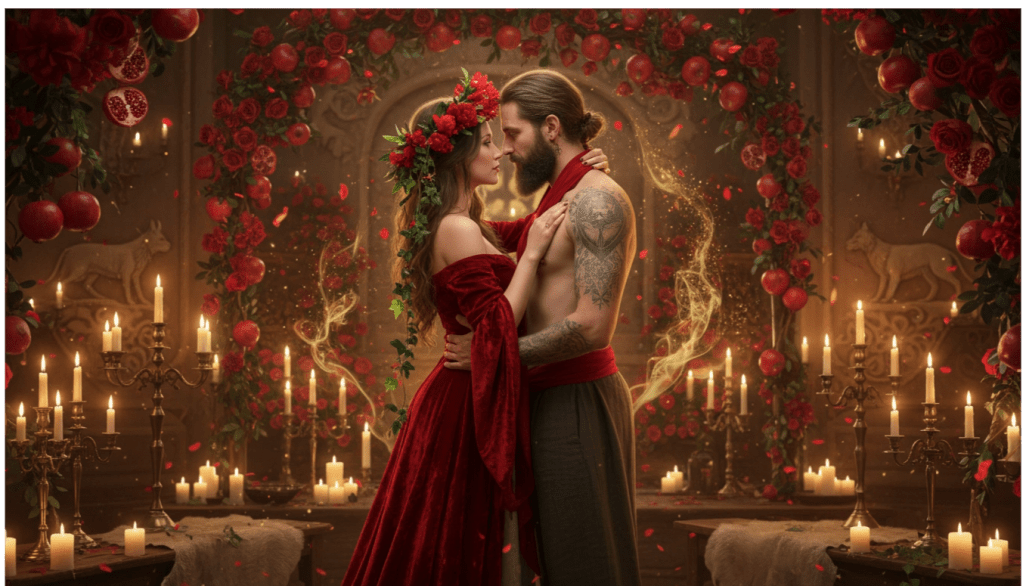
Consider Lupercalia instead, the ancient festival on February 15 that strips away the shopping and scripts. No chocolates required, no credit card swiped. Emerging from Rome’s primal roots, it celebrates wild desire, purification, and life force through raw, embodied rituals: runners shedding clothes and shame, lovers claiming each other under wolf moon light, blood blessings that honor essence over expense. Men can lead here, invoking strength as sacred hunters or devoted priests, without spending a penny. A simple red candle, shared words, naked dance in private, or a vow to your lover’s untamed heart boosts the union instantly. Desire awakens. Stagnation sheds. Closeness deepens. Celebrate Lupercalia in your temple, and watch love run free.
Lupercalia Temple Ritual is now yours in the Patreon shop, but hear this: it is not for everyone. This primal, Venus-blessed rite stirs blood, desire, and wild union in ways that demand care, consent, and reverence. For goddess lovers, romantics, and those ready to shed shame for sacred hunger, it awakens profound shifts. Approach with respect, or step away. Enter the temple only if your heart can hold its fire. ($8.88)
Lupercalia was an ancient Roman festival held annually on February 15, dedicated to fertility, purification, and the protection of livestock and women from barrenness. Its origins trace back to the earliest days of Rome, possibly as early as the 5th century BCE, and it was presided over by the Luperci, a brotherhood of priests selected from noble families. The festival took place in the Lupercal cave on the Palatine Hill, sacred to Lupa, the she-wolf who nursed Rome’s twin founders Romulus and Remus. This primal location set the tone for a rite that celebrated raw life force, wildness, and the beginnings of human civilization.
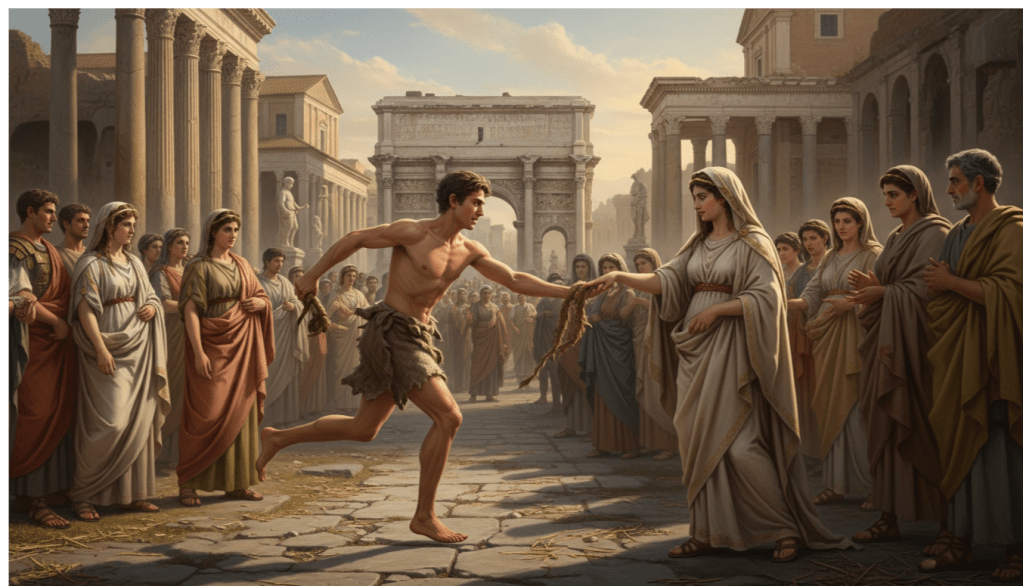
The core rituals were strikingly visceral. Young men from the Luperci ran naked or scantily clad through the streets of Rome, striking women with februa, thongs made from the freshly sacrificed hides of goats and a dog. These whips were believed to promote fertility and ease childbirth; women eagerly sought the blows, seeing them as blessings from the gods. The sacrifices themselves were graphic: goats for purification and a dog for protection, their blood used to anoint the priests’ foreheads with a blood-soaked knife, then wiped away with milk-soaked wool to symbolize cleansing. Amid the chaos, there were also lotteries for pairing young men and women, a precursor to romantic matchmaking that some historians link to later Valentine’s traditions.
Lupercalia’s wild energy persisted until the late 5th century CE, when Pope Gelasius I banned it, likely due to its pagan intensity clashing with Christian values. Yet echoes remain: February as a month of purification (februa means “purifications”), the romantic pairing customs, and even the feast of St. Valentine on February 14 as a Christian overlay. For modern observers, it offers a glimpse into Rome’s unpolished devotion to life’s cycles: blood, desire, fertility, and renewal, far removed from sanitized holidays.
Lupercalia Temple Ritual is now yours in the Patreon shop, but hear this: it is not for everyone. This primal, Venus-blessed rite stirs blood, desire, and wild union in ways that demand care, consent, and reverence. For goddess lovers, romantics, and those ready to shed shame for sacred hunger, it awakens profound shifts. Approach with respect or step away. Enter the temple only if your heart can hold its fire. ($8.88)
Valentine’s season can feel like a test. Are you loved enough, chosen enough, postable enough. For many sensitive, romantic souls, it is also the time when old wounds ache and secret desires get louder. Beneath the roses and restaurant bookings, there is a deeper longing: to feel truly seen, to speak from the heart without feeling foolish, to let love be something sacred again instead of a performance.
What if Valentine’s was less about what you receive and more about what you express. Not in a self-sacrificing way, but in a way that lets your heart come back into the center of the story. One of the simplest, most powerful ways to do this is also one of the oldest: the love letter.
Why love letters still matter
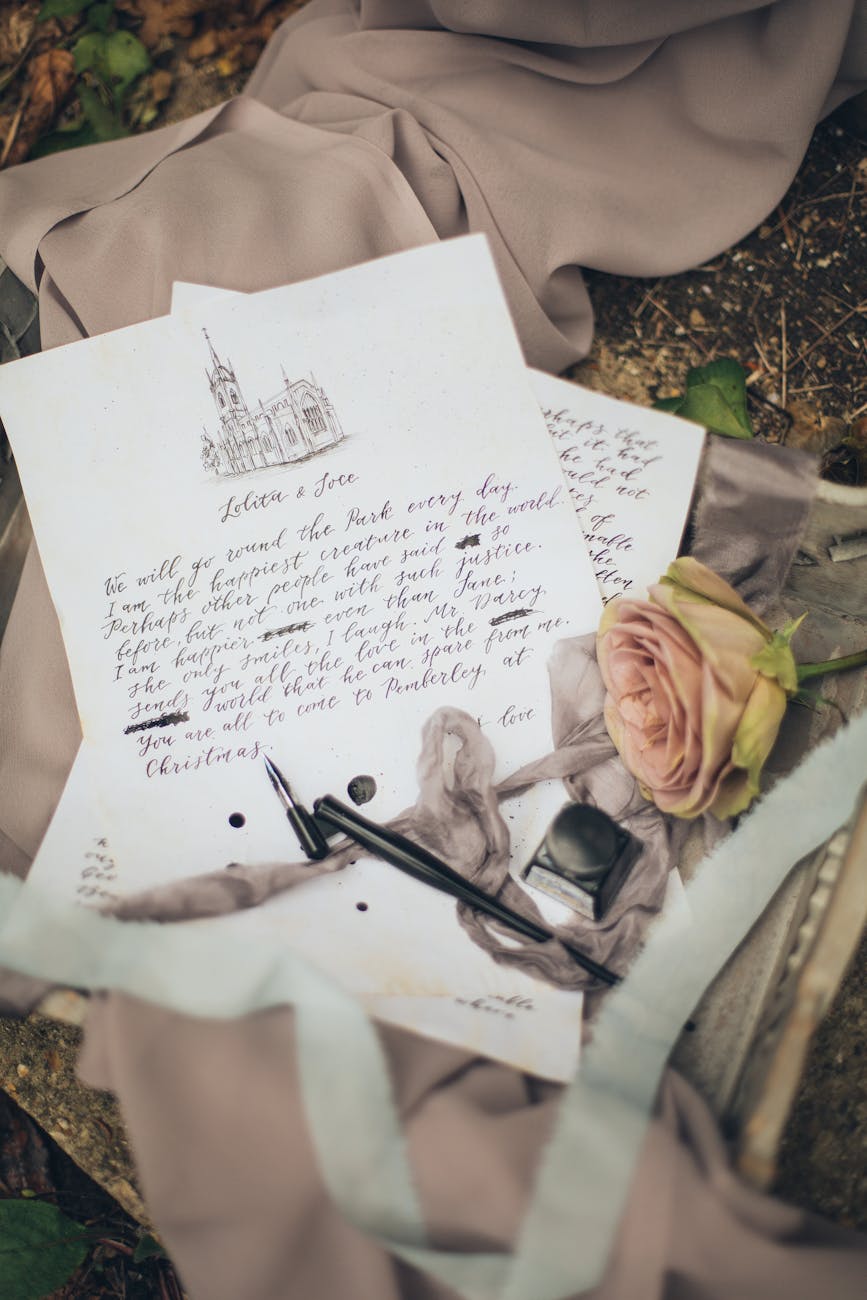
In an age of fast texts and disappearing messages, a love letter is a small act of rebellion. It says, “I am willing to slow down. I am willing to choose my words. I am willing to be seen.” For the writer, it is a moment of clarity. For the receiver, it becomes a keepsake, something that can be held, reread, pressed against the heart on a difficult day.
Love letters matter because they:
Anchor your feelings in something real and tangible.
Help you access your own truth about love, instead of copying a script.
Create connection: with yourself, with a partner, or with the future love you are calling in.
You do not need perfect handwriting or poetic training. You only need a willingness to be honest and kind.
A simple heart-opening practice before you write
Before you write anything, take three minutes to shift out of anxiety and into presence.
Sit comfortably, place one hand on your heart and one on your lower belly.
Breathe in slowly for four counts, hold briefly, and breathe out for six counts. Repeat three times.
Ask yourself: “How do I truly feel right now.” Let one word or sensation arise, even if it is messy: hopeful, tired, tender, scared, grateful.
Imagine a soft light in your chest, growing warmer with each breath. Silently say, “I am willing to be honest. I am willing to be gentle.”
Only then pick up your pen or open your document. You are not writing from panic or performance. You are writing from a heart that has been invited to the table.
Honest, non-toxic love letters
Many people avoid love letters because they are afraid of two things: sounding cringe or handing someone too much power. Both fears come from the same place old patterns of love that included games, tests, and unspoken expectations.
A healthy love letter:
Speaks in “I” language: “I feel,” “I remember,” “I hope,” rather than attacking or blaming.
Focuses on appreciation, truth, and desire, not on guilt, manipulation, or ultimatums.
Shares vulnerability without collapsing: you reveal your heart while still respecting your own worth.
Your job is not to impress or convince. Your job is to let your inner truth find a clear, kind voice.
Prompts to help you start
Here are a few grounded prompts you can use whether you are writing to yourself, a current partner, or a future beloved:
“Right now, when I think of you, I feel…”
“A moment I still carry with me is…”
“What I appreciate about you (or about myself) is…”
“The kind of love I want to grow into looks like this…”
“One truth I am finally ready to admit is…”
You can take just one of these, write a single honest paragraph, and call that your letter. It does not have to be long to be powerful.
For couples: turning letters into a quiet ritual
If you share your life with someone, you can turn letter writing into a simple ritual evening instead of another obligation.
Each of you writes a short letter before or during the evening.
Light a candle, turn off notifications, and take turns reading (or quietly handing over) your letter.
After reading, the receiver does not need to give a speech. A simple “Thank you. I will sit with this,” is enough.
The goal is not to fix everything in one night. The goal is to create softness, to let tenderness back into the room. Many people, especially men, quietly keep love letters for years. Your words may become an anchor they return to many times.
For singles: letters as manifestation
If you are single, love letters can become a gentle manifestation practice that is rooted in self-respect instead of desperation.
You might write:
A letter to your present self, thanking yourself for every time you chose not to abandon your own heart.
A letter to a future beloved, describing the atmosphere of the relationship you are inviting in: mutual respect, laughter, slow mornings, shared growth.
A letter releasing an old pattern or past relationship, closing that door with gratitude and honesty so another can open.
The point is not to force a specific person into your life, but to align your words, your body, and your choices with the kind of love you truly want to live.
When vulnerability reveals the wrong person
There is a truth many of us avoid: sometimes, a sincere love letter reveals that the person in front of us cannot meet us. If someone mocks your sincerity, uses it against you, or shows contempt for your openness, that reaction is a gift of clarity. Painful, but clarifying.
Let your letters be both offerings and lanterns. Offerings of your real heart, and lanterns that show you who is capable of holding that heart with care.
A temple for real romantics: my Patreon offering
If your whole being is humming a little reading this, you might be one of the quiet romantics I created a special space for.
Inside my Patreon temple, I just opened a Valentine’s collection devoted entirely to this work. In it, you will find:
A guided heart-softening meditation to help you drop into your body before you write.
Channeled goddess-of-love messages for different love states: romantic, single, long-term, and heart-healing.
In-depth, practical guidance on writing love letters that are honest, non-toxic, and soul-aligning.
Writing prompts, examples, and reflection questions you can use again and again.
Simple rituals for couples and singles to turn letters into living acts of devotion and manifestation.
It is a small, accessible offering designed to feel like stepping into a candlelit temple of love for an evening, then carrying that energy back into your real, imperfect life.
If you feel that tug in your chest, that soft “this is for me,” you are warmly invited into the Patreon temple. Bring your pens, your questions, your romantic heart. We will let the goddess of love meet you exactly where you are and help you write your next chapter with more honesty, tenderness, and courage than ever before.
Valentine’s Day has come and gone. The roses are wilting, the chocolates half-eaten, and the collective spell of romantic consumerism is fading. But for those of us who walk the older paths, the mid-February celebration of love does not end here. Its roots run far deeper, reaching back to a wild and primal Roman festival called Lupercalia.
Unlike the polished romance of St. Valentine, Lupercalia was an untamed honoring of fertility, purification, and the sacred pulse of life itself. It belonged to Faunus, the Roman god of nature and flocks, akin to the Greek Pan, and to the She-Wolf, Lupa, who nourished Rome’s founders, Romulus and Remus.
This was a time when people gathered not for candlelit dinners, but for ritual cleansing, ecstatic dancing, and the invocation of carnal freedom.
While Valentine’s Day promotes coupledom and hearts wrapped in ribbons, Lupercalia celebrates the primal current of desire. Not as something to be tamed, but as a bridge between human and divine nature. It reminds us that love begins with the body, with its instincts, needs, and vitality. Sacred eros is not shameful. It is regenerative.
The Return to the Wild Heart
For the priestesses and seekers walking the Goddess path today, Lupercalia beckons us to reclaim the wildness that society often softens beneath romantic ideals. This is not a call to chaos, but to balance. A remembering that true love and sacred union thrive when the wild and the holy are allowed to coexist.
Consider marking this season with a small ritual of liberation.
Burn a note releasing old attachments or expectations around love. Dance to awaken your sensual power and reconnect with your inner Lupa. Offer honey, wine, or rose petals to the Goddess in thanks for the passion and vitality that live within you.
As you do, notice how the energy shifts. From longing into empowerment. From external validation into self-devotion.
This is the essence of Lupercalia. Purification through celebration. Alchemy through embodiment. Union through freedom.
As we step out of Valentine’s shadow and back into the sacred wild, remember that love is not just a sentiment. It is a living current that pulses through the body, the earth, and the ancient heart within us.
Thank you for reading,
To learn more about my Lupercalia research, visit me on Patreon:
Find a quiet space where you can sit or lie down comfortably. Let your hands rest gently over your heart or in your lap. Close your eyes and begin to breathe slowly and deeply.
Inhale through your nose. Exhale through your mouth.
With each breath, allow your body to soften. Release the tension in your shoulders. Unclench your jaw. Let your heart feel safe for a moment.
Now imagine a soft, warm light above you. It glows in shades of rose, gold, and gentle seafoam green. This is the loving presence of Venus, of Aphrodite, the energy of attraction, beauty, and sacred union.
As you breathe in, see this light slowly descending toward you. As you breathe out, feel it entering your chest and filling your heart.
Let it settle there.
This is not a love you need to chase. This is the love you are.
Quietly repeat within yourself:
I am open. I am safe to receive love. I am the embodiment of love itself.
Feel this truth like warmth spreading through your chest. Notice any tightness, any old memories, any lingering ache from past heartbreaks. Do not push them away. Simply allow them to rise gently to the surface.
Now imagine the light of Venus moving through those old spaces. It does not judge. It does not force. It cleanses.
See past lovers, old attachments, and old pain dissolving like mist in the morning sun. Thank them for what they taught you, then let them drift away.
With each exhale, release what no longer belongs to your heart. With each inhale, call your energy back home to yourself.
Feel your heart becoming clearer. Softer. Lighter.
Now imagine a soft pink glow growing brighter within your chest. This is your natural magnetism. Your warmth. Your ability to attract love without effort.
Whisper within:
I release the past with compassion. I cleanse my heart with love. I welcome the love meant for me.
If you are calling in romantic union, picture love gently walking toward you. Not in urgency, not in desperation, but in peace. Feel what it would be like to be met, seen, and held in a love that feels calm and true.
If you are calling in a twin flame reunion, imagine a golden thread of light connecting your heart to theirs. See it becoming clear, strong, and open. Feel the healing moving through that thread, dissolving misunderstandings, softening old wounds, and restoring harmony in divine timing.
Do not force the outcome. Simply feel the connection surrounded by light, protected and guided.
Now return to the center of it all.
Your heart.
Feel the warmth there. The glow. The quiet pulse of life. This is the source of all attraction. This is the love that draws the right people, the right timing, the right union.
You are not blocking love. You are learning to hold it.
Take a deep breath in and feel gratitude filling your chest. Breathe out and let it expand beyond your body.
Imagine this loving energy surrounding you like a soft aura, moving with you, speaking through you, calling love toward you naturally.
Before you open your eyes, whisper one final intention:
Love flows to me. Love flows through me. I am ready to receive and to be received.
Slowly bring your awareness back to your body. Gently open your eyes, carrying this warmth with you into the rest of your day.
If you resonate with this meditation, listen to the guided audio on my Patreon for free.
I just released a new Valentine’s offer on Patreon: a soft, sacred space for love letters, goddess transmissions, and real-world romance for grown hearts.
Inside this mini-offering you will find:
A gentle heart-opening meditation to clear your mind and soften your chest before you write.
Channeled letters from Venus to four different hearts: the romantic, the single one, the long-term lover, and the heart-healing one.
Practical, soulful tips for writing your own love letter without shame, tests, or toxic patterns.
Prompts and examples for letters to yourself, to a current partner, and to a future beloved, turning manifestation into sacred communication instead of scripting.
Conversation / “love night” prompts for couples who want to open up, turn on, and grow closer without cringing.
A simple ritual for couples and a visualization ritual for singles to anchor everything in your body and your life.
This is for you if:
You secretly love romance but are tired of the plastic version of Valentine’s.
You want to give a love letter that feels honest, adult, and tender, not cheesy.
You are single and want to call in love while actually honoring your own heart first.
You are healing from old patterns and want your next chapter in love to feel different.
You do not need a perfect relationship to step into this. You only need a heart that is ready to tell the truth more beautifully.
If this is tugging at you, come into the temple and claim your copy. Your letter, your ritual, your next version of love are waiting inside.
Valentine’s has a shadow side that almost no one talks about. It is the day some people buy roses for their wife and then, an hour later, send the same message to their lover. It is a night when some go home glowing with affection, and others sit in a quiet room, scrolling, wondering what is wrong with them because no one chose them.
The pressure to “perform” love in one specific, public way turns a holy, tender force into a scoreboard. People compare bouquets, restaurant photos, and relationship statuses, while underneath there can be numbness, resentment, or outright deception. The packaging says “romance,” but the energy can be obligation, panic, or pretending.
In this temple, we name that honestly so we can do something different. What really matters for Valentine’s is not how many gifts you receive or how perfectly your story fits the romantic script. What matters is:
whether your love is honest,
whether your heart is being honored,
whether your choices align with your soul instead of your fear.
Valentine’s, at its most sacred, is not a test of your desirability. It is an invitation to pause and ask: Where is love real in my life, and where is it only for show? Where am I living in devotion, and where am I splitting myself between appearances and truth?
Here, we let the goddess of love put her hand on the scale and tip it back toward what is real: integrity, tenderness, self-respect, and the kind of love that does not need a receipt or a photo to prove it happened.
What to say on Valentine’s Cards
There are several options for what to write on your Valentine’s card for your lover.
A love poem is the classical choice
A truth about your relationship that they would relate to would be adorable
A question that does not freak them out
A sexy note if you already know it will be well received
Hearts are always welcome
Valentine’s E-cards
Download your favorite and dedicate it to your lover.
Writing a love letter
I wrote love letters to my beloved for Valentine’s Day a few years back and he was so very touched. He was even delighted and he said he needed that. Awww
Valentine’s Collection on Patreon
You will find my signature love poetry, channeled messages from the goddess of love, short meditations, and devotional prompts that help you rewrite your love stories from the inside out. There are also printable and sharable ecards, conversation sparks, and little ritual touches you can use for yourself, a lover, or your closest friends, so that Valentine’s becomes a living temple moment instead of a test of your relationship status.
This collection is for singles, couples, situationships, and the simply love-obsessed. If your heart still secretly believes in handwritten letters, mythic romance, and the goddess whispering in the background of your life, Valentines is where she and you meet.
Access my premium collection of Valentine’s content here:
Before the cards are opened, before the flowers are chosen, before you decide whether you are “alone” or “taken” this year, Aphrodite is already present.
Valentine’s season is not a test of worthiness, but a reminder that love is a living force moving through every part of your life: in desire, in friendship, in beauty, in the quiet ways you care for yourself.
Long before roses and paper hearts, this season carried the pulse of fertility, devotion, and longing. And her message remains the same: you are not waiting for love to arrive, you are already standing inside it.
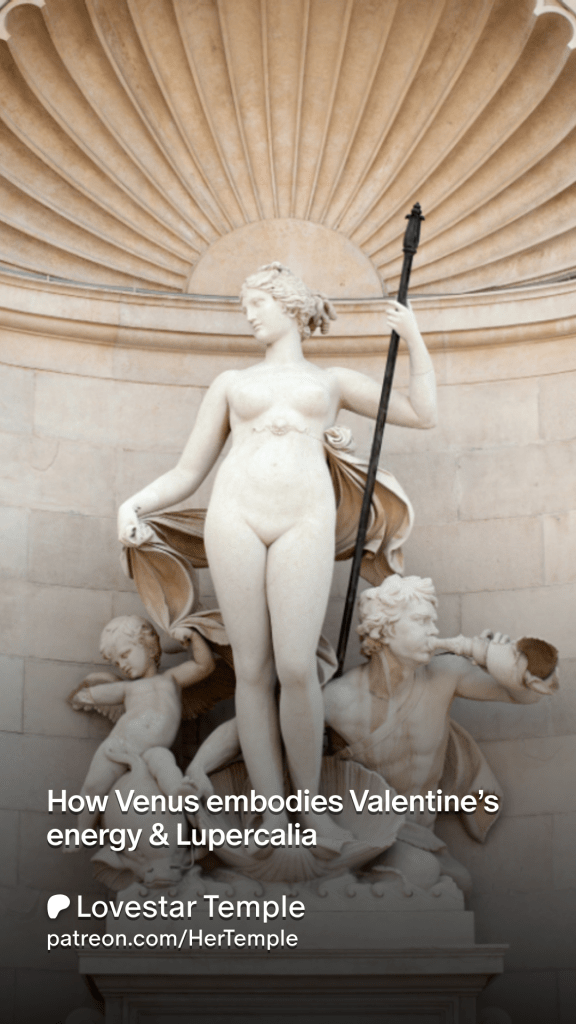
Every February, a specific energy takes hold: flowers, love notes, fantasies of perfect weddings, and the deep hunger to be chosen. This isn’t just a modern marketing creation. Beneath the surface of Valentine’s season pulses an ancient current, the enduring power of the Roman goddess Venus.
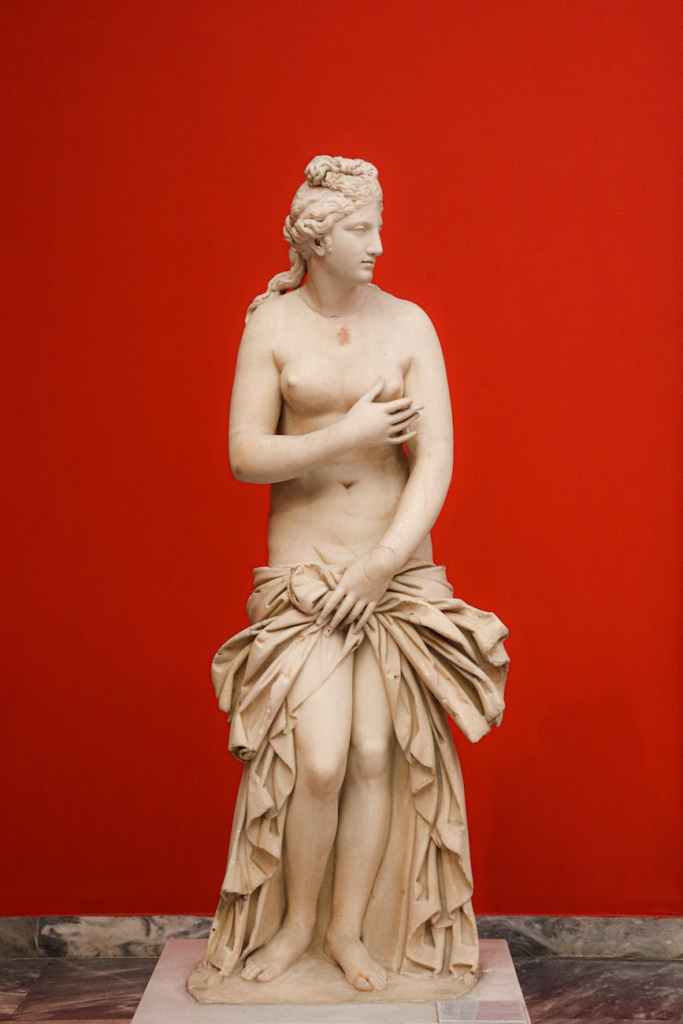
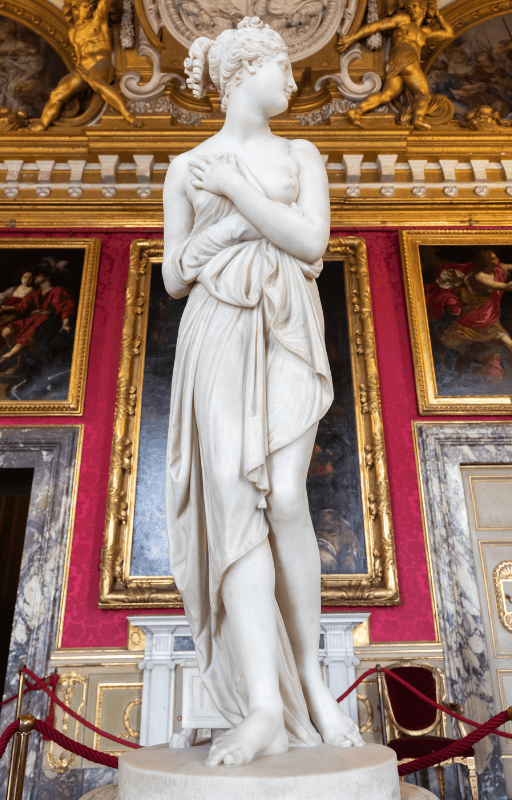
Venus was far more than a “love goddess.” She embodied desire, beauty, fertility, prosperity, and victory. She was both a deeply personal and a powerfully civic force, considered the ancestress of the Roman people. When we focus on romance and union in February, we are reactivating her field.
The Layers Beneath Valentine’s Day:
While the date February 14th comes from Christian martyrs, its romantic tone was a medieval addition, creating a perfect bridge for older, pagan energies to flow into a new form.
The ancient Roman festival of Lupercalia (February 15th) celebrated fertility and vitality with wild, public rites. Though not directly honoring Venus, its core concern, the pairing of bodies and futures, sits firmly within her domain.
Over centuries, the intense seasonal focus on fertility and pairing from Lupercalia and the divine authority of Venus gradually softened and reframed into the romantic ceremonies we know today.
Our Modern Rituals Are Roman at Heart: The cherubs (Cupid was Venus’s son), the hearts, the belief that love deserves grand gestures, legal recognition, and sacred symbols, these are all inheritances from a Roman worldview. Love was seen as a destiny-shaping force worthy of public ceremony and divine blessing, an intuition we still echo every February.
Ready to explore the full story? The premium post, “Venus, Heart of February,” dives deep into:
The mythic and political power of Venus.
The fascinating, debated link between Lupercalia and Valentine’s Day.
How Cupid represents love’s irrational, piercing force.
The direct line from Roman wedding rituals to our modern “white wedding” aesthetics.
Discover how the goddess of love, beauty, and union still shapes our deepest February longings.
It’s Valentine’s week. Soon, we shall talk about the pagan Valentine’s, but for now, I will share love messages from Venus, Roman goddess of Love.
Valentine’s Love Message
Valentine’s Love message from Venus:
Whoever is meant to meet you in love will find you through resonance, not pursuit.
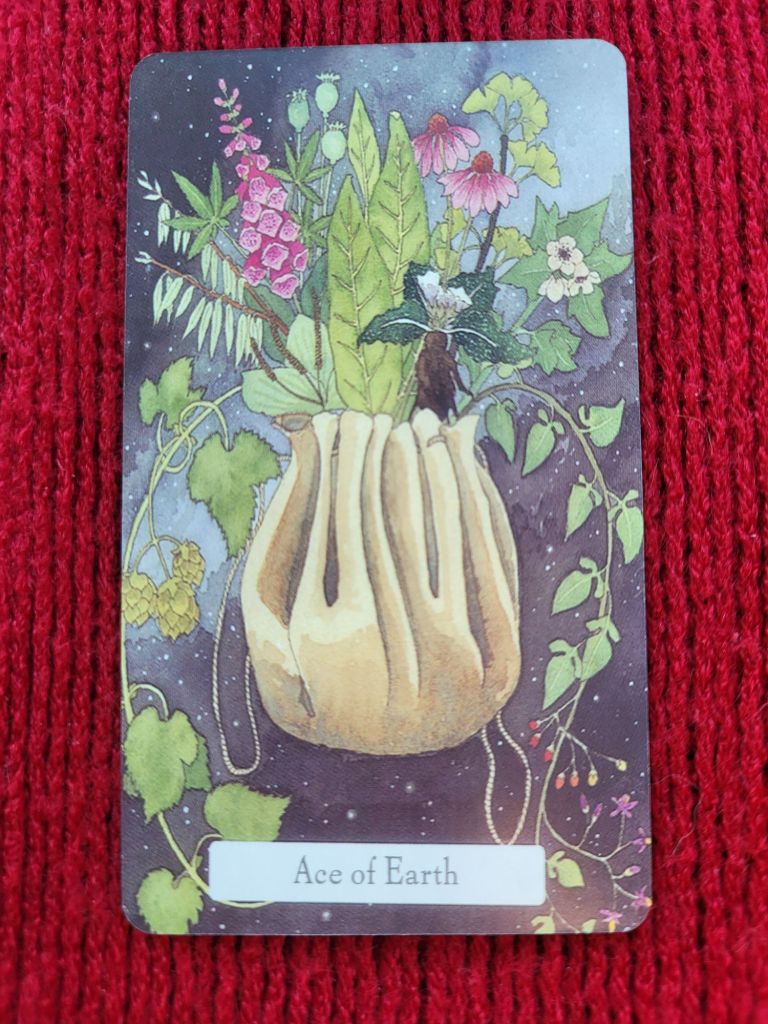
Love is entering your life in a steady, grounding way, offering something real that can be built and nurtured over time. Whether this points to a new connection or a deepening of one you already have, it speaks of care shown through consistency, trust, and the quiet comfort of feeling safe with someone.
This love may begin gently, almost unnoticed, but it holds strong long-term potential, like a seed taking root beneath the surface. Nurture the small moments, the simple gestures, and the patience between you, because what is growing now has the power to become a lasting, abundant bond that feels like home.
Read the long form free message by Lovestar Temple and follow for future love messages:



 Lovestar Temple🔥 🔥