
Tag: feminine power

  • Polka Dot Dress – A Fashionable Feminine Lejend – Poetry

    Dear Lovestar,

    I finally saw the actual news about the polka dots dress, and I have to say I am a fashion lover but do not actually own a polka dress. I am now wearing a long red dress. I am also Cuban, and you do know Latinas dress up, I am currently dressed up in my own living room. I write a lot about fashion, also. I am loving this topic.

    The news is that this brave lady stood up to ICE looking fabulous, apparently women want to look like her and there is an awfully hateful debate which helps nobody. In this case, the dreadful debate focused on existing hate for others and not this woman, the news, and definitely, no focus on actions or change.

    For me, this is about the power of femininity, and I bet you that Aphrodite was with her for her to look fabulous in tragedy and Athena was also there for her to be this powerful. We, modern women in safety choose the Aphrodite, she however is Athena’s child, bold, powerful, unafraid, commanding.

    Sending great vibes to this boss, the polka dot lady, I hope she actually loves the polka dot look.

    This lady deserves poetry, also it is the best I can do right now:

    Here is a poem for the Polka Dot Lady:

    In a world that offers ice
    to those left out in the cold,
    in a world where masculinity
    is a law; there are women just like you
    who have the balls that some lack
    in the cutest polka dots.

    Eyes see you and do not understand
    if you were making a stance for peace
    or for fashion’s sake. I see a feminine boss
    who makes the news without guns,
    I see a mother’s warm touch,
    I see a wife and a woman of Love,
    for only Love makes us go against
    the tyrannical world.

    Eve

    Polka Dot Lady

    She knew full well her intentions,
    I assume.
    She went out with persuasion
    in her mind:
    "I go out to make a stand"
    She might have realized,
    though likely she was pissed off
    at the cruel state of the world.

    But how do you make a stance
    in the cold, masculine world?
    Ah, wear a dress, make it look good,
    bring your best jacket to the test,
    do your hair and look your best,
    make a statement with red shoes
    to then go out and put a pig in its place.

    Eve
    This isn't about politics
    for me,
    it isn't about taking sides
    to forever fight,
    I don't want to look like her,
    I only wish to nurture within me
    a tiny fire that might resemble
    her lioness in the streets.
    Inspiration is her power:
    If we think she is the dress,
    we have failed to understand
    femininity.
    This is the rage that I feel
    in a world where justice
    has a birthplace and a cost
    and the rest of us
    we endure, we defend ourselves
    and we request rights
    that apparently were not ours to claim
    at birth.

    Eve
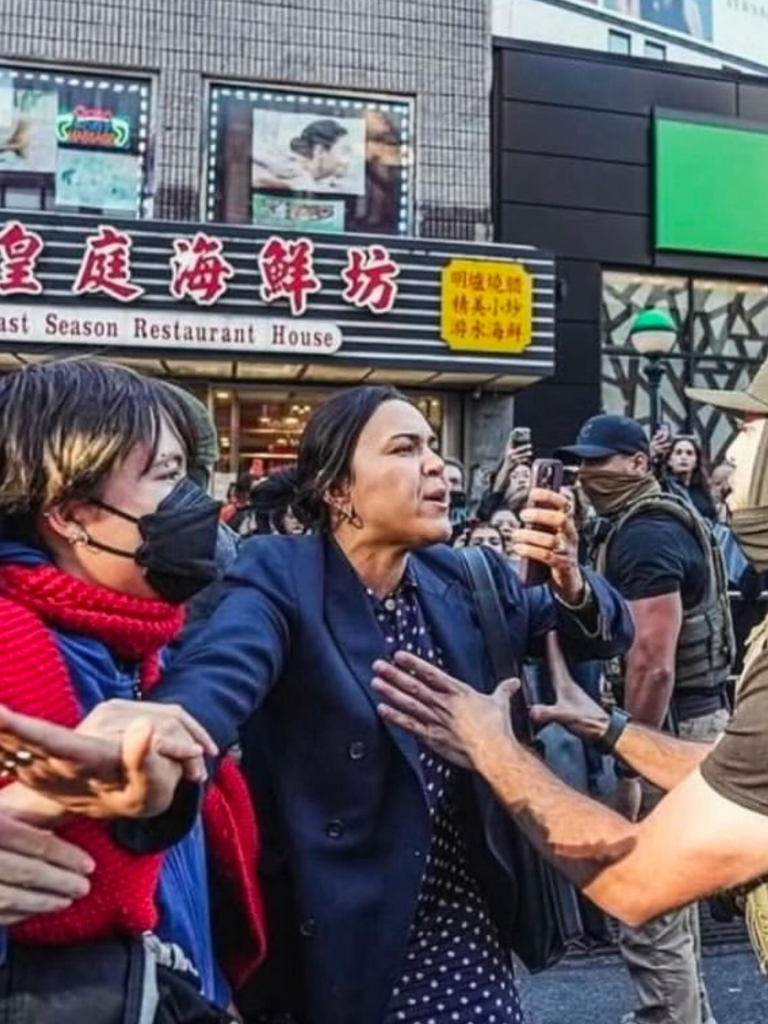
    How may you treat a woman animal
    when she feels hate within her body?
    Bring more force?

    Hers was a reaction
    to the ways of the world and her stand,
    his hands though, are much too close
    to her breasts like she had weapons there.

    Women are not weaker because
    they wear a polka dot dress,
    but yes, if they become the dress.

    Eve
    Watch a woman make a stand.
    This is not new, not at all.
    Women all over the world
    give their lives to deep causes.

    But let us diminish her depth.
    her rough courage, and her strength,
    and reduce her to her looks
    and her polished dress.

    Perhaps she was the lioness
    In the angry, screaming crowd,
    but also, she was best dressed,
    what makes the news is her dress.

    This shows nothing about her:
    it is the public who is shallow,
    watching drama with their popcorn
    and judging women for looks.

    Eve

    Ode to polka dots (before I read the deepness of the news, I saw polka dots trending and wrote about their style)

    On this weekend,
    I shall wear
    A cute polka dot dress,
    My long hair in two braids,
    And I'll go out sun or rain
    To have fun and decompress.

    Eve
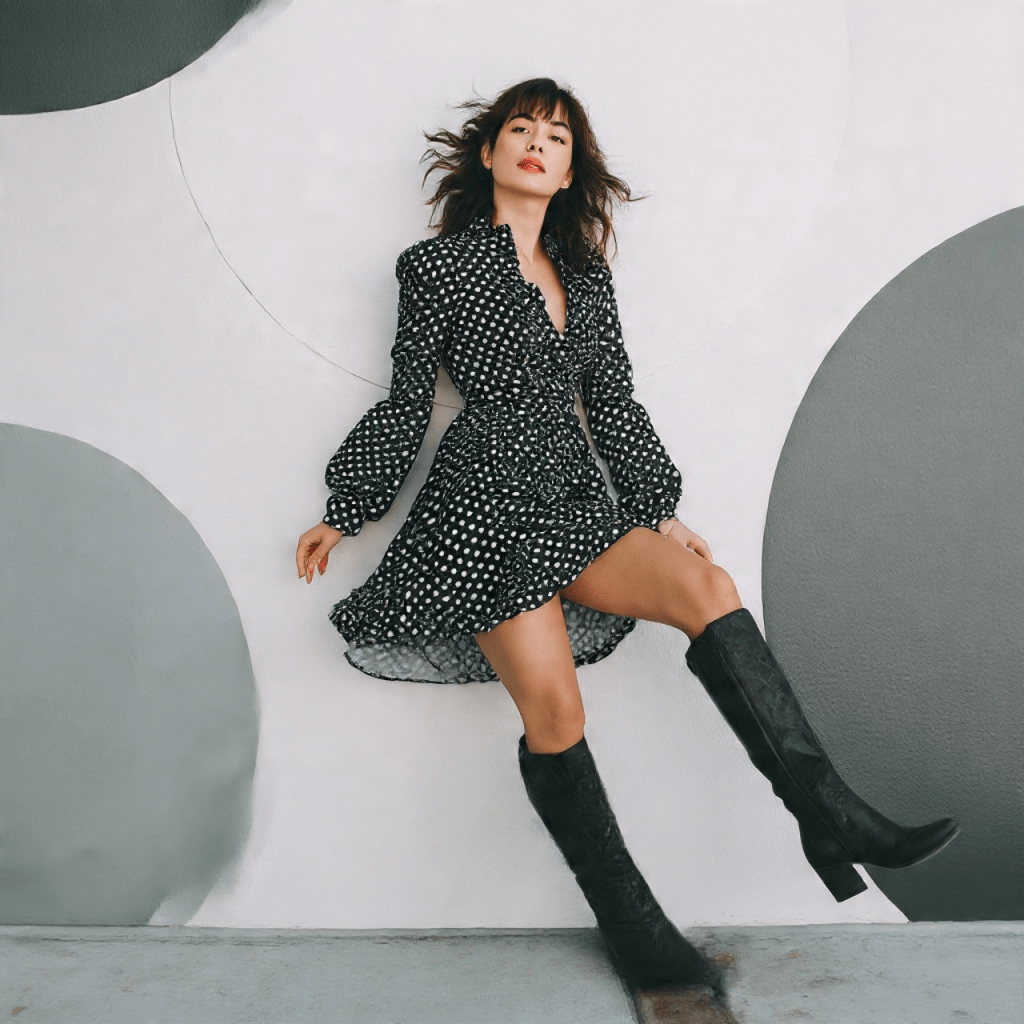
    I have little black dresses
    and little red dresses.
    I have long, flowing dresses,
    and colorful dresses,
    and soft, cozy dresses
    that inspire caresses.

    But I have yet to buy
    a polka dot dress.
    One with romantic sleeves
    with ruffles and waves
    and the interesting pattern
    that makes you look its way.

    Thank you for reading.

    If you would like to voice your opinion on this matter, I welcome the debate. However, I have noticed a toxic tendency for political debate online to be very hateful and never producing any good effect.

    Because if we debate someone in that hate, the person will become defensive and not actually listen. No change comes from a debate that is charged with hate. Many online debates are forceful conversations rather that.

    Please state your opinion from a place of awareness and I will be happy to read them.


    This post was inspired on Threads by Instagram where I share my poetry and book content as well as Spanish posts, and tarot/ goddess stuff.

    Follow me on Threads:

    https://www.threads.com/@eve.sanchez87

    Eve

  • The Poetess

    Dear Lovestar,

    Welcome the poetess into our space today. She has something important to say.

    Poetess is one of my favorite words in English. I am the poetess because I create with my feminine energy.

    The Poetess

    Ode to Sappho, ancient poetess

    I created a free eBook to honor the greatest poetess in all of history. Download the free PDF through this link:

    https://payhip.com/b/6Tjxz

    I was offended that autocorrect changed poetess to some other word. 
    screenshot_20240913_202909_miraquill15934069622564365

    The Word “Poetess”: A Forgotten Gem in Language and Why It Deserves a Revival

    The word “poetess” evokes a sense of beauty, grace, and history, conjuring images of women who shaped poetry through the ages. While this term was once used to describe a female poet, it has largely fallen out of fashion in modern times. As we explore the ancient roots of this word, why it faded from use, and why it still holds a unique allure, we uncover a rich narrative of gender, art, and language.

    Ancient History of “Poetess”\

    Ode to Sappho, ancient poetess

    I created a free eBook to honor the greatest poetess in all of history. Download the free PDF through this link:

    https://payhip.com/b/6Tjxz

    The word “poetess” can be traced back to ancient Greece and Rome, where poetry was a revered art form. Female poets were rare but highly respected, such as the famous Sappho of Lesbos, often regarded as one of the greatest lyric poets of antiquity.

    The term itself began to gain prominence in English in the 16th and 17th centuries, as poetry became a significant part of European courtly life. Many women who expressed themselves through verse were given the title of “poetess,” a label that both honored their craft and subtly highlighted their gender. It acknowledged their talent while placing them in a separate category from male poets.

    Why “Poetess” Fell Out of Use

    By the 19th and 20th centuries, the word “poetess” began to carry a different weight. It became associated with a certain patronizing tone, as if female poets were less serious or skilled than their male counterparts. This shift was partly due to the changing social dynamics of the time—women were entering the literary world in greater numbers, and they sought to be recognized simply as “poets,” without the added layer of gender distinction.

    The feminist movements of the 20th century further propelled this change. Many women rejected the term “poetess” as it seemed to reinforce a division between male and female creativity, implying that women’s poetry was somehow different or secondary. As equality became the goal, the neutral term “poet” was adopted by women and men alike, with “poetess” seen as outdated and unnecessary.

    Why “Poetess” is Beautiful

    Though the word “poetess” is seldom used today, it retains a certain beauty and elegance. Its very sound is melodic. More than that, “poetess” carries with it a sense of history, reminding us of the many women who wrote under difficult circumstances, sometimes with little recognition.

    The term honors the feminine energy in poetry, which can be nurturing, passionate, intuitive, and fierce. While “poet” is a gender-neutral term that promotes equality, “poetess” offers a nod to the powerful, unique voice of women who have shaped the poetic landscape. It doesn’t diminish their work but instead celebrates the essence of femininity within the craft.

    In a world where we often seek to blur distinctions in pursuit of equality, there’s something special about words that acknowledge the feminine presence without devaluing it. “Poetess” is one such word—a celebration of both poetry and womanhood, a reminder that there is beauty in difference, not inferiority.

    A Call for Revival

    Reclaiming the word “poetess” doesn’t mean we return to an era of gendered titles. Instead, it’s a way to celebrate the legacy of women poets throughout history. It reminds us that art, like language, evolves, and there’s power in acknowledging the past while embracing the future.

    Using “poetess” today can be a statement of pride, a nod to the creative feminine spirit that has shaped much of our literary history. It is a word that holds layers of meaning—strength, elegance, artistry—inviting us to remember the women who paved the way in poetry.

    In the end, the word “poetess” is not obsolete but rather a forgotten gem, one that can still shine brightly when used with reverence and understanding.

    Ode to Sappho, ancient poetess

    I created a free eBook to honor the greatest poetess in all of history. Download the free PDF through this link:

    https://payhip.com/b/6Tjxz

    With Love,

    Eve