Lovestar Temple

  • Exploring the Lives of Influential Women from Ancient Times: Cleopatra, Sappho, Hypatia, and Livia.

    Dear home educator, Home Education log: Last night, my two older daughters and I went on a deep dive of influential women of the ancient past. It was enlightening and inspirational. I had to hopefully inspire someone else. I would love to talk more about this. Ancient influecial women Welcome to an exciting journey through […]

    Exploring the Lives of Influential Women from Ancient Times: Cleopatra, Sappho, Hypatia, and Livia.

    Sappho: The Poetess of Lesbos

    Sappho was a Greek poetess known for her beautiful and emotional poetry. Her poems celebrated love, friendship, and the beauty of the world. She was a teacher and led a school of young women who were also poets.

    I created a free eBook download Ode to Sappho to speak of her influence and the importance of us still talking about her.

    Download Ode to Sappho for free through this link:

    https://payhip.com/b/6Tjxz

    Eve

  • Written by fate

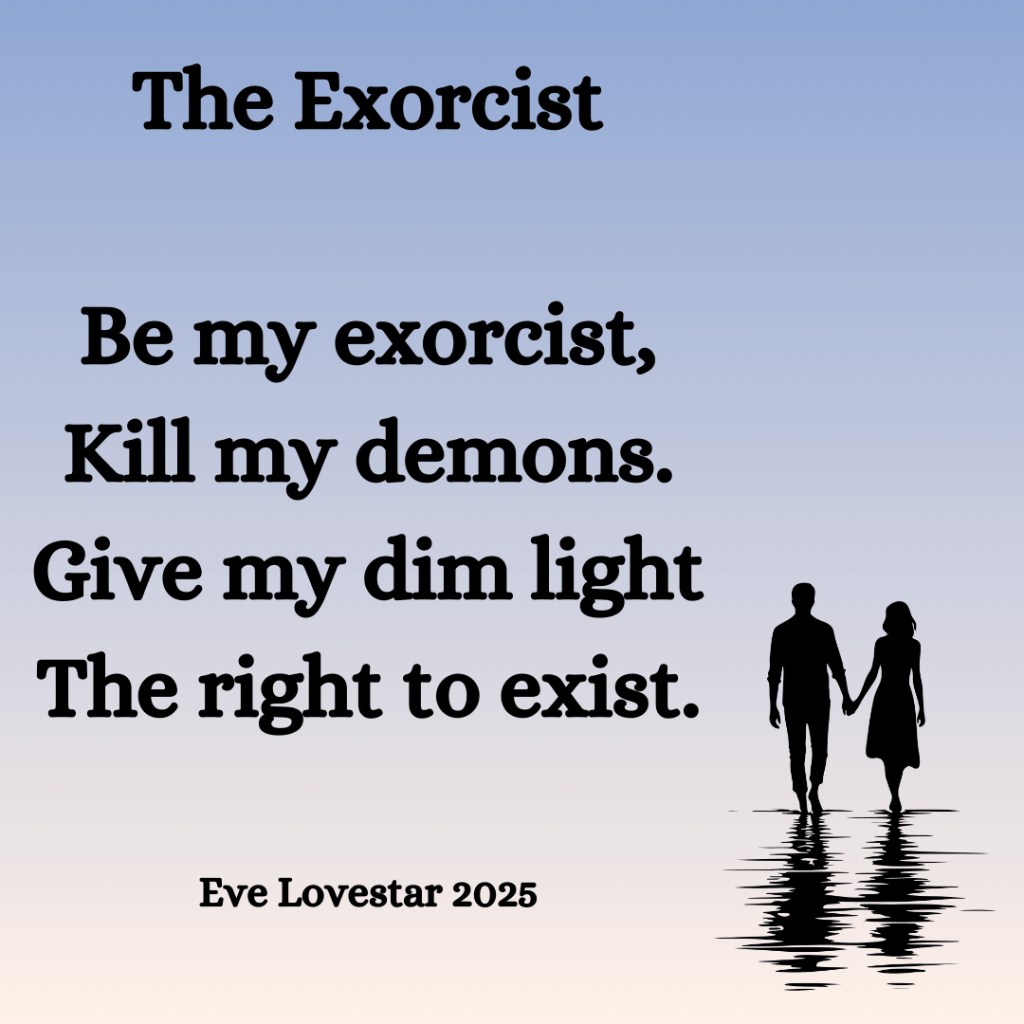
    This poem speaks of meeting my beloved, blissfully unaware of the way the relationship was going to take off and become everlasting.

    Eve

  • Alma Poeta – Sell my soul to poetry translated to Spanish

    Únete al grupo de poesía en Facebook, donde compartimos poesía moderna, clÔsica y antigua, ademÔs de ejercicios e inspiración para escribir poesía.

    En este grupo puedes leer y compartir tus propias creaciones.

    Poetry group in Spanish. Join if you are a Spanish student!

    https://www.facebook.com/share/g/12Dr4GtH59e/: Alma Poeta – Sell my soul to poetry translated to Spanish

  • Poetize the Planet

    I’m going to poetize the planet,

    I’ll spark a strike, I’ll fan it,

    Of words and of verse,

    I will inspire a poet

    It’s my goal in the universe.

    Eve Lovestar

  • The Love Knot. A metaphor for falling in love.

    This poem talks about twin flame love and the knot symbolizes twin flame union.

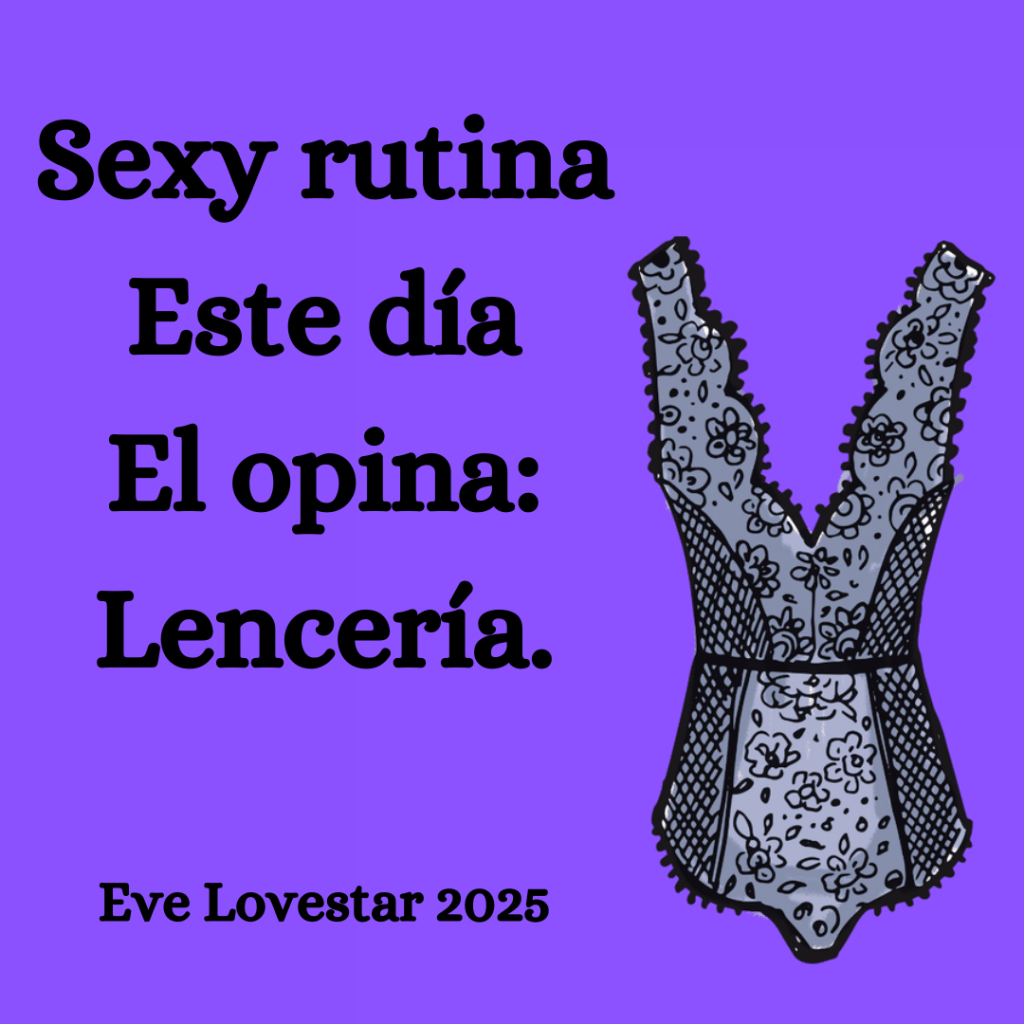
  • Lingerie that starts a fire

    Dear Lovestar,

    On a poem some time ago, I said

    (...)
    I will be the fire
    You will be the wood
    (...)

    Is it not great how a metaphor turns an otherwise harsh and unappealing overtly sexual desire into a poem?

    Since I am misses feminine, I do not have to explain how “He is the wood” (If you do not understand this, aka, you are underage, this site is not for you).

    Since he is a pile of wood, a sleeping forest, he only needs a match to go up in flames.

    I do not possess any wood, but I have a lot of spark, I guess.

    I am laughing out loud.

    Eve

  • Manifestation Quest and a few words about manifestation

    The Power of Intentional Action

    In just a few lines, Eve Lovestar’s poem Manifestation Quest reveals a profound truth: intention is the bridge between desire and reality. Actions rooted in clear purpose have the power to align us with the outcomes we seek. This simple yet transformative idea can guide us in everything from our daily habits to our grandest dreams.


    The Magic of Intention

    “Actions performed with intention yield results more aligned.” These words remind us that intention is not just a thought but a force—a driving energy that shapes our actions. When we act with focus and clarity, we tap into the flow of the universe, aligning our efforts with the outcomes we desire.

    Consider the difference between routine and ritual. A routine is something we do without much thought, like brushing our teeth. A ritual, however, is infused with intention. Lighting a candle to set a goal or taking a mindful moment before a task transforms an ordinary action into something sacred and powerful.

    Reflection: Are your actions purposeful, or are you moving through life on autopilot?


    Aligning Requests and Results

    “With the request in question.” These words highlight an essential step in manifestation: clarity. If you don’t know what you want, how can your actions bring it to you? Clarity in our intentions ensures that our energy is directed and focused, rather than scattered.

    Writing down your goals, visualizing success, or even speaking your desires aloud can be powerful tools for aligning your actions with your aspirations. When your “request” is clear, the universe responds in kind.

    Action Step: Take five minutes each day to write down your intentions. Be specific, and let your heart guide you.


    Manifestation Is a Quest

    The words, “Manifestation Quest,” frame the process as a journey. Manifestation isn’t instant—it requires persistence, patience, and belief. Like any quest, it may have obstacles, but each step forward brings you closer to your goal.

    This perspective reminds us to embrace the journey itself. Each intentional action, no matter how small, is a part of the spell we cast to bring our dreams to life. Celebrate the progress, trust the process, and remain open to unexpected blessings along the way.


    Living the Manifestation Quest

    Inspired by Lovestar’s poem, here’s how to integrate the wisdom of intentional action into your life:

    1. Set Clear Intentions: Know what you want, and state it boldly.
    2. Act Purposefully: Perform each action with a clear connection to your goal.
    3. Stay Present: Focus on the process, not just the outcome.
    4. Celebrate Small Wins: Every step matters—acknowledge them!
    5. Trust the Flow: Align your energy, but allow the universe to work its magic.

    Conclusion: Manifestation Is Within Your Reach

    Eve Lovestar’s Manifestation Quest reminds us that we are the architects of our realities. By combining clear intention with purposeful action, we align ourselves with the life we seek.

    So, what’s your next move on this quest? Set your intentions, act with purpose, and trust that the universe is ready to respond. Your dream is closer than you think.

    What will you manifest today?

    Eve

  • Protected: Secret Poetry

    This content is password-protected. To view it, please enter the password below.

  • Exploring Poetry as a Tool for Language Learning

    Dear reader, I am currently reading poetry in Latin for my humble Latin learning practice. Let’s discuss why poetry is a fun and effective way to acquire a new language. This applies to students who already have some knowledge of the new language. If you are starting to read in your target language, this tip […]

    Exploring Poetry as a Tool for Language Learning
  • Edge of Civilization. My most powerful poem yet?

    Dear Lovestar,

    I bring today a shortie but packed with power creation.

    This poem is much line me, tiny, but packs a powerful punch.

    In my country, in Cuba, we say the best perfume comes in a tiny bottle – as well as the most powerful poison- and this poem is both perfume and poison.

    Confronting our duality

    There is a line that runs through the heart of every human being, an invisible but palpable divide between the primal urges that reside deep within us and the higher aspirations that civilization demands. This line is not static—it is a thread, a fragile connection that we, as humans, are constantly navigating. In this powerful poem, “Edge of Civilization,” the struggle for balance between the savage and the civilized is laid bare, demanding that we confront the tensions between our nature and our society.

    The Line Between Beast and Civilized

    ā€œA human threads the line / Between the beast and the civilizedā€ā€”this opening line is a stark reminder that our humanity is never a given. It’s not something innate or automatic; it is something we must thread every day. To thread this line means to walk a fine edge, straddling the tension between our animalistic instincts and the rules, norms, and compassion that civilization imposes upon us.

    The phrase “the beast” brings to mind something raw, untamed, and violent. It symbolizes our capacity for cruelty, our destructive impulses, the side of us that seeks power, control, and survival at any cost. The beast is not a distant part of us—it is close, always within reach, always whispering its temptations. It may be a desire for revenge, a lust for dominance, or a deep-rooted fear that drives us to lash out.

    On the other side, we have the civilized—the side that upholds empathy, cooperation, peace, and respect for others. Civilization requires us to put aside our baser instincts and to work towards a collective good. It demands self-control, restraint, and the understanding that our actions have consequences that ripple outward, affecting not just ourselves but the entire fabric of society.

    The tension between these two forces is what defines much of the human experience. This line, this thread, is not only about survival, but about choosing who we are—and more importantly, who we want to become.

    Leaving Behind Violence: A Call for Change

    “Leaving raping, murder, and warring behind”—in these lines, the poem shifts from describing the internal struggle to emphasizing the need to rise above it. These horrific acts—rape, murder, and war—are not just criminal; they are also a reflection of humanity’s darkest desires. They represent a betrayal of the highest potential we have as human beings.

    By explicitly stating that we must leave these acts “behind,” the poem calls us to rise above our destructive impulses. It suggests that the line between civilization and barbarity is not just something we must walk—it is something we must choose to cross.

    The act of leaving violence behind is a profound challenge. It asks us to confront our darker sides, to acknowledge the impulses that still exist within us, and to actively decide to reject them. This is not an easy path; it requires constant self-awareness, empathy, and discipline. But the call is clear: we must rise above these base actions and find a way to live together in peace.

    Helping Others Cross the Line: A Collective Responsibility

    “Would help you cross the line!” This final line carries with it a message of hope and community. It suggests that crossing the line between barbarism and civilization is not just an individual journey, but a collective one. It speaks to the need for mentorship, guidance, and solidarity in helping others overcome their base instincts and embrace their higher selves.

    In a world where violence, oppression, and war still run rampant, the poem calls upon us to be part of the solution. The line is not just for ourselves to walk—it’s a line we help others to cross as well. It reminds us that change is not only a matter of personal growth but also of supporting and encouraging those around us in their struggles.

    The Message of the Poem: A Continuous Struggle

    Ultimately, “Edge of Civilization” is a call to action. It challenges us to recognize the duality within us all—the beast and the civilized—and to make a conscious decision to rise above our primal urges. The line between civilization and brutality is not a fixed boundary; it is a dynamic, ever-present challenge. We must thread it carefully, with awareness and responsibility, for we have the power to shape who we become, individually and collectively.

    The poem urges us to leave behind the violence that so often defines our darkest moments, and instead, choose empathy, respect, and peace. It is a reminder that civilization is not something we inherit; it is something we must actively build, thread by thread, moment by moment.

    This powerful piece forces us to confront uncomfortable truths about human nature, while offering the possibility of redemption—a chance to cross the line and become better, not only for ourselves but for everyone we encounter.

    If you want to help change the world, please consider sharing your wisdom in the comments.

    Eve