If you love poetry, these might be true about you:
You might be refined
You must appreciate language
You are comfortable feeling and expressing emotion
You probably enjoy the power of expression
You might be an avid reader or a writer
You could be a scholar or teacher type
You could be a researcher or artist
People who read poetry often share certain traits or characteristics:
1. Sensitivity: They tend to be attuned to emotions and the nuances of language.
2. Creativity: Many poetry readers are creative individuals who enjoy exploring new ideas and perspectives.
3. Curiosity: They have a desire to delve deeper into the meaning behind words and symbols, often seeking insight and understanding.
Appreciation for beauty: Poetry readers often have a keen appreciation for the beauty of language, imagery, and metaphor.Reflectiveness: They enjoy introspection and contemplation, finding value in self-expression and self-discovery through poetry.Empathy: Poetry readers often possess a strong sense of empathy, as they are able to connect with the emotions and experiences of others through poetic expression.Open-mindedness: They are receptive to different styles and forms of poetry, embracing diversity and experimentation within the art form.
Interpreting poetry involves understanding its themes, imagery, language, and tone. Start by reading the poem multiple times to grasp its overall meaning. Pay attention to symbolism, metaphor, and word choice. Consider the historical and cultural context, as well as the poet’s background. Additionally, reflect on your own emotional response to the poem and how it connects to your own experiences. Discussing the poem with others can also offer new perspectives. Remember, there’s no single “correct” interpretation; poetry often invites multiple readings.
Tips for poetry reading
Read Aloud: Poetry often relies on the rhythm and sound of language. Reading a poem aloud helps you experience its musicality and emotional nuance more deeply.
Slow Down: Take your time with each line. Pause to savor the imagery, metaphors, and emotional weight of the words. Allow the poem to unfold slowly and give each phrase the attention it deserves.
Visualize: Try to picture the scenes or emotions described in the poem. Visualizing the imagery can enhance your connection to the poem and make the experience more vivid.
Feel the Emotions: Engage with the emotions conveyed in the poem. Let yourself feel the joy, sorrow, or longing expressed. This emotional immersion can make the poem more impactful.
Explore Multiple Readings: Read the poem several times. Each reading can reveal new layers of meaning and offer a deeper understanding of the poet’s intent.
Annotate: Make notes in the margins or use a journal to jot down your thoughts, interpretations, and feelings. This active engagement can deepen your appreciation and help you connect with the poem on a personal level.
Research Context: Sometimes understanding the historical or personal context of a poem can enrich your reading experience. Look up background information about the poet or the time period if you’re curious.
Discuss with Others: Sharing and discussing poetry with friends or a reading group can provide new insights and perspectives. Hearing how others interpret a poem can broaden your own understanding.
Connect to Your Life: Reflect on how the themes and emotions of the poem resonate with your own experiences. Personal connections can make the poem more relevant and meaningful to you.
Embrace Ambiguity: Poetry often thrives in ambiguity and open interpretation. Allow yourself to appreciate the multiple meanings and nuances, even if the poem doesn’t have a clear or definitive message.
The sight of the moon was fantastic yesterday evening and this morning.
When it comes to the energy, there was a partial eclipse last night, which I did not see but the energy change, in my experience, was delightful.
My lover had the wonderful secret dreams for 2 days in a row and in the physical, we bonded beautifully.
This season I am going for a more organized life. I want to shed some stuff and move forward lighter.
I will work with this mantra to accomplish my goals.
This being a mantra of the super full moon eclipse, it is charged.
Let me know if you are using the energy for some magick or growth.
I will not tell in this open form the details of my full moon. However, I will create a secret post with those details I do not wish to forget.
I will tell you soon how to receive the secret posts. I have been giving you a taste with the more risqué and secret magickal practice. There will be more of such posts appearing. I apologize if you dislike not receiving those, however, as my secrets, I can’t share them openly with anyone. I hope you understand.
Enjoy this poem that invites my lover into a sexy romantic encounter.
Good morning, dear love. It’s a wonderful day Especially as your gaze Lands on my face. And now, I invite you To play a little game Of passion with me: Let us start with a kiss Or, if that is too fast, We can start by conversing Of our bodies reaching bliss. I will say something sexy For our game to begin; Something meant to entice And to turn things within All of your being. And I’ll wait for the feel Of your hands on my skin. And from there, dear lover, Take me where you please I will receive your gift Of bliss in peace And treat you like my king. And you know, my intention Is always to repeat. We will not tell what we’ve done But when I look in your eyes, I’ll remember with Love, The innumerable nights When making love I became your home.
This poem exudes intimacy, passion, and tenderness. My invitation to my lover is both playful and profound, blending sensuality with a deep emotional connection. The use of conversational language, beginning with “Good morning, dear love,” sets a warm and inviting tone, drawing the reader into a private, shared moment. The game of passion unfolds with a gentle rhythm, reflecting the balance of desire and affection. The ending, where I become “home” to my lover, speaks to the emotional depth of our bond, where love and sensuality intertwine in a sacred, recurring dance. It’s a celebration of both physical and emotional unity.
I wish you receive the energy of this poem, energy of physical union.
This poem exudes a deeply sensual and intimate energy. It invites a partner into a passionate and playful experience, blending romance with a sense of eager anticipation. The tone is both inviting and sultry, creating an atmosphere of closeness and desire. The language is rich with imagery and emotion, emphasizing a connection that is both physical and profound.
The poem begins with a tender acknowledgment of the partner’s presence and gaze, setting a warm and affectionate tone. As it progresses, it transitions into a more intense and erotic invitation, encouraging a shared exploration of pleasure and intimacy. There’s a sense of surrender and mutual enjoyment, with the speaker expressing a willingness to receive and give pleasure, and a desire to keep the moments private and cherished.
Overall, the energy of the poem is one of deep romantic longing, intense connection, and a celebration of the physical and emotional aspects of love. It creates a vivid picture of a loving and passionate relationship, where every touch and glance is imbued with significance and joy.
Manifest this energy in your life
The energy of this poem can be a powerful tool for manifesting love by tapping into the emotions it evokes. When we immerse ourselves in the sensual and intimate feelings the poem stirs within us, it’s like planting seeds of desire and connection in our own hearts. Just as a painter feels the colors they use, letting the vibrant energy of each stroke shape their vision, we can allow the emotions of the poem—passion, tenderness, and closeness—to become part of our reality. By internalizing the feelings expressed in the poem, we start to embody the energy of love and attraction, creating an emotional space where that love can thrive and manifest in our lives. The words become more than just a story; they become a living force that helps us draw love toward us, inviting the passion and depth we desire.
Please let me know how this makes you feel and if you read all this, consider reading my other articles.
I was offended that autocorrect changed poetess to some other word.
The Word “Poetess”: A Forgotten Gem in Language and Why It Deserves a Revival
The word “poetess” evokes a sense of beauty, grace, and history, conjuring images of women who shaped poetry through the ages. While this term was once used to describe a female poet, it has largely fallen out of fashion in modern times. As we explore the ancient roots of this word, why it faded from use, and why it still holds a unique allure, we uncover a rich narrative of gender, art, and language.
Ancient History of “Poetess”\
Ode to Sappho, ancient poetess
I created a free eBook to honor the greatest poetess in all of history. Download the free PDF through this link:
The word “poetess” can be traced back to ancient Greece and Rome, where poetry was a revered art form. Female poets were rare but highly respected, such as the famous Sappho of Lesbos, often regarded as one of the greatest lyric poets of antiquity.
The term itself began to gain prominence in English in the 16th and 17th centuries, as poetry became a significant part of European courtly life. Many women who expressed themselves through verse were given the title of “poetess,” a label that both honored their craft and subtly highlighted their gender. It acknowledged their talent while placing them in a separate category from male poets.
Why “Poetess” Fell Out of Use
By the 19th and 20th centuries, the word “poetess” began to carry a different weight. It became associated with a certain patronizing tone, as if female poets were less serious or skilled than their male counterparts. This shift was partly due to the changing social dynamics of the time—women were entering the literary world in greater numbers, and they sought to be recognized simply as “poets,” without the added layer of gender distinction.
The feminist movements of the 20th century further propelled this change. Many women rejected the term “poetess” as it seemed to reinforce a division between male and female creativity, implying that women’s poetry was somehow different or secondary. As equality became the goal, the neutral term “poet” was adopted by women and men alike, with “poetess” seen as outdated and unnecessary.
Why “Poetess” is Beautiful
Though the word “poetess” is seldom used today, it retains a certain beauty and elegance. Its very sound is melodic. More than that, “poetess” carries with it a sense of history, reminding us of the many women who wrote under difficult circumstances, sometimes with little recognition.
The term honors the feminine energy in poetry, which can be nurturing, passionate, intuitive, and fierce. While “poet” is a gender-neutral term that promotes equality, “poetess” offers a nod to the powerful, unique voice of women who have shaped the poetic landscape. It doesn’t diminish their work but instead celebrates the essence of femininity within the craft.
In a world where we often seek to blur distinctions in pursuit of equality, there’s something special about words that acknowledge the feminine presence without devaluing it. “Poetess” is one such word—a celebration of both poetry and womanhood, a reminder that there is beauty in difference, not inferiority.
A Call for Revival
Reclaiming the word “poetess” doesn’t mean we return to an era of gendered titles. Instead, it’s a way to celebrate the legacy of women poets throughout history. It reminds us that art, like language, evolves, and there’s power in acknowledging the past while embracing the future.
Using “poetess” today can be a statement of pride, a nod to the creative feminine spirit that has shaped much of our literary history. It is a word that holds layers of meaning—strength, elegance, artistry—inviting us to remember the women who paved the way in poetry.
In the end, the word “poetess” is not obsolete but rather a forgotten gem, one that can still shine brightly when used with reverence and understanding.
Ode to Sappho, ancient poetess
I created a free eBook to honor the greatest poetess in all of history. Download the free PDF through this link:
I recently read my old blog post about the ancient Greek sunflower myth and wrote this poem abouty the myth.
Find this spell below the myth
The Sunflower Myth:
A nympth loved the sun god and at first he desired her too and in the Roman account I read, the writer said the god’s love was never moderate suggesting a big attention shift in the god. Because of some drama, Aphrodite might have made the sun god fall in love with another. The result is he turned his attention away from the nymph. The nymph, in a jealous fit, told the father of the other girl, who murdered his daughter due to her relationship with the god. The god was furious and never looked back at her but she loved him so much, than even then, she could not take her gaze away. She would look at him everyday in the sky and this is how she turned into a sunflower.
Twin Flame Separation and the Myth of the Sunflower: A Journey of Eternal Love
The idea of twin flames—two souls split from the same source, destined to find each other—is often described as both beautiful and tragic. The connection is intense, magnetic, and spiritual, but the journey isn’t always one of immediate union. Separation is common in the twin flame journey, a necessary phase of growth, healing, and personal evolution. To understand this profound experience, we can turn to the wisdom of ancient myths, specifically the Greek myth of the sunflower, which beautifully captures the essence of love, longing, and transformation.
The Myth of Clytie and Apollo: An Eternal Gaze
In Greek mythology, the sunflower’s origins are rooted in the tragic love story of the water nymph Clytie and the sun god, Apollo. Clytie, deeply in love with Apollo, admired him endlessly. Every day, as Apollo rode his chariot across the sky, pulling the sun behind him, Clytie would watch him with unwavering devotion. Her love for him was all-encompassing, but it was not reciprocated.
Clytie’s love went unreturned, and in her sorrow, she stopped eating and drinking, sitting in one place, gazing longingly at Apollo as he journeyed across the heavens. The gods, witnessing her unending love and grief, transformed her into a sunflower. Now, as a sunflower, Clytie continues to follow Apollo, turning her face toward him each day as he travels across the sky, forever bound to him in her devotion, yet forever apart.
Twin Flame Separation: The Sunflower’s Lesson of Longing and Growth
Like Clytie and Apollo, twin flames experience a powerful attraction—a love that transcends the physical world, rooted in the soul. However, this intense connection often leads to a period of separation, where the twin flames are forced apart for various reasons: emotional growth, healing of past wounds, or the necessity of individual evolution. During this time, the longing for the other can feel unbearable, much like Clytie’s endless gaze toward Apollo.
But the sunflower myth teaches us something essential about this separation. Clytie’s transformation into a sunflower represents a shift from passive suffering to an active, eternal connection. She becomes something more—her love, though not physically returned, transforms into a new state of being. In this way, twin flame separation is not simply a time of loss; it is a period of personal transformation.
Just as Clytie became the sunflower, her love taking on new life and form, twin flames in separation are given the opportunity to grow. This period is often one of deep introspection, healing past traumas, and developing spiritually. The separation forces each twin to face their own shadows, confront fears, and ultimately become whole within themselves. The myth reminds us that even when physical union isn’t possible, the connection between twin flames remains, evolving and deepening over time.
The Power of Patience and Surrender
Clytie’s unwavering devotion, despite her heartache, mirrors the need for patience in the twin flame journey. The sunflower is a symbol of faith, standing tall even in the face of sorrow, knowing that the sun will rise again. Twin flames, during their time apart, must learn to surrender to the flow of life, trusting that the separation is a necessary step toward eventual reunion or spiritual ascension.
The sunflower myth reminds us that, like the sun and its cycle across the sky, love moves in phases. Twin flames may be apart, but their paths are connected by a deeper spiritual journey. Just as the sunflower continues to follow the sun every day, twin flames are bound to each other, not just by physical proximity but by a soul-level connection.
Reunion and Transformation
For twin flames, the separation is often not the end of the journey. After periods of growth, they are drawn back together, this time with greater understanding, wisdom, and balance. The sunflower, though always apart from Apollo, never loses sight of him. In a similar way, twin flames will eventually find each other again, whether in this life or beyond, their love and connection renewed, transcending the limits of time and space.
In conclusion, the myth of the sunflower is a powerful metaphor for the twin flame journey. It teaches us that separation is not a punishment but a time of transformation. Like Clytie’s eternal gaze toward Apollo, twin flame separation is filled with longing, but it also offers a path toward spiritual growth and self-realization. The myth reminds us that love, though it may be distant at times, is eternal, and even in separation, there is beauty and purpose.
Twin flames, like the sunflower and the sun, will always find their way back to each other. Whether together or apart, their love is a force that continues to grow, transform, and evolve, shining brightly across lifetimes.
Sunflowers, with their golden petals radiating like beams of sunlight, embody beauty in its most natural and radiant form. Their towering stems and broad faces turn daily to follow the sun, a graceful act of devotion that mirrors both strength and elegance. The contrast of their vibrant yellow against the deep green leaves creates a striking visual harmony, and their geometric perfection reflects nature’s artistry. Beyond their appearance, sunflowers symbolize resilience, warmth, and loyalty, reminding us that true beauty often lies in the balance of grace and persistence, blooming brightly even as they reach toward the light.
Sunflower Charm Spell for Ending Separation and Transformation
Purpose: This spell harnesses the energy of the sunflower to end separation between twin flames or loved ones, inviting transformation and unity.
What You’ll Need:
A small sunflower charm (or a real sunflower head if possible)
A yellow candle (symbolizing the sunflower’s radiant energy)
A piece of gold or yellow thread (to bind energies together)
A small piece of paper and a pen
A clear quartz crystal (for amplifying your intentions)
Lavender or sandalwood incense (for spiritual clarity and healing)
Timing: Perform this spell during a waxing or full moon, when the energy is strongest for growth and reunion.
Steps:
Prepare the Space: Light the incense to cleanse your space. Set up a small altar with the sunflower charm, candle, and quartz crystal. Make sure you are in a quiet, peaceful environment where you can focus.
Focus on Your Intention: Sit comfortably, holding the sunflower charm in your hands. Close your eyes and visualize the separation you wish to end. Picture the distance, whether emotional or physical, melting away, and see both people transforming and coming together in harmony.
Write Your Desire: On the small piece of paper, write down the names of the individuals and a brief sentence or two about the transformation you desire. For example: “May our separation end, and may we both transform into stronger, more united souls, bound by love and harmony.”
Charging the Sunflower Charm: Light the yellow candle and hold the sunflower charm over the flame (but not too close). Say the following words aloud:“Sunflower bright, follow the sun, Bring us together, let separation be done. Transform our hearts, make us anew, In radiant love, unite us true.”Envision the sunflower charm absorbing the light and warmth of the candle, filling with golden energy.
Binding the Energy: Take the gold or yellow thread and wrap it around the charm, visualizing the energy binding the two souls together, bringing unity and transformation. As you wrap the thread, repeat:“Bound by light, bound by flame, Our paths align, our love the same. Together we grow, apart no more, Our hearts transformed, stronger than before.”
Place the Paper Under the Charm: Fold the piece of paper with your written intention and place it under the sunflower charm and quartz crystal. Let the candle burn down completely, knowing that the spell is in motion.
Keep the Charm: After the candle has finished burning, carry the sunflower charm with you as a reminder of the transformation and reunion energy. Keep the quartz crystal near your bed or in a sacred space to continue amplifying your intention.
Closing:
Thank the universe and the sunflower spirit for their guidance. Blow out the incense and sit quietly for a moment, feeling the connection grow stronger.
Optional:
You can revisit this spell during moments of doubt by holding the charm and repeating the words to reignite the energy of transformation and unity.
This spell taps into the sunflower’s symbolism of loyalty, warmth, and transformation, helping to heal the rift of separation while encouraging personal growth and a stronger bond.
If you try this spell, let me know how it goes. Or let me know if you do something similar.
Love is my favorite English word. The ending v sound doesn’t happen in my natal Spanish. Additionally, I found that the root of the word love is more ancient than the Latin (and the Spanish) “Amor”.
Being my favorite word and so full of meaning, it ia no surprise that I write it all the time. All things are related, right? Love is my mission, my favorite word, my creation inspiration. Don’t worry about the excess of emotion (if you are new here), I am a Pisces poet…
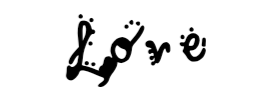
Spiky and delicate flourish calligraphyMy kids’ fontEve fontDigital calligraphyDigital calligraphyCalligraphy with detailed flourishes
On this post, I will share all my personal magick, spellcasting tools.
I recently joined Woo Wednesday, an amazing X community to talk about where are the witches at? They meet once a month and it was such a healing and blessed space.
Our last Poetry lights meeting where amazing poetry is read. I read Interdimensional Travel” and my new “Poetry Lights” poem.
Talking to the host, Vennie, an amazing poetess witch, I told her about my new spellcasting journey, which is a new development, yet, was spirit led. Vennie decided to have spellcaating as the topic for the next Woo Wednesday and I am gathering all my spellcasting tools on this post so I can be prepared and read from here.
My magick ebooks
The Art of Knot Magick, an introductory ebook on my Stay shop $1.11. See some magick from the book below Knots for Venus. Ritual included in my Knot Magick eBook $1.11 on my Etsh shop From my Knot Magick eBook for sale on my Etsy shop
First of all I want to thank the dear person who read 71 of my blog posts a few days ago and the sweet person who read more than 20 blog posts today (or was it yesterday?). I am grateful for you and next time, start a conversation and I will write a poem for you. This happens every now and then and I blog for you dears.
Dear Lovestar,
I have been on such a beautiful journey with my beloved twin flame Scorpio. Our union has flourished after much needed healing, about two days ago, though, he surprised me with an unexpected request/ fantasy of sorts:
Scorpio likes me to seduce him. That is he loves it when I aggresively start the sex! 🫢🫣🥴 I was triggered. I kind of am a sex blogger, I guess. Why is that upsetting to me?
I have had this post written and saved for 2 days but I wasn’t able to give in. But it is Friday the 13, Venus day and day of the goddess. It is sexy femme day on steroids, so I post today and I am going home (currently stuck for hours getting car work done) to seduce him out of his pants! I immediately knew today was the day.
Also, because I was almost killed in a truck accident, it is my new birthday, a sign from my goddess, Venus, to bring out my feminine power. (More on that accident saving later)
Seductress energy, the Venus power
Embracing the Art of Seduction: A Personal Journey
In a world where traditional roles and expectations often shape our relationships, I find myself navigating a delicate balance between my values and my beloved lover’s desires. For the past 17 years, my twin flame and I have built a loving, monogamous relationship, blessed with five wonderful children. He has always been a source of unwavering support and devotion. Recently, he expressed a desire for me to take on a role that challenges my traditional views: he wants me to seduce him.
The word “seduction” has always carried a certain weight for me, evoking notions of assertiveness and masculine energy. As someone who cherishes old-fashioned values and has been deeply influenced by a more reserved, traditional upbringing, this request triggered a sense of discomfort. In my mind, seduction was something to be approached from a more passive and nurturing standpoint.
However, understanding the importance of maintaining an open and fulfilling relationship, I took a step back and considered his request with an open heart. I realized that this was not about shifting roles but about exploring a new dimension of our connection.
In spiritual terms, this might be seen as an interplay between Venus and Lilith energies. Venus, representing love, beauty, sexual energy, and harmony, encourages us to embrace our sensuality in a way that enhances intimacy and connection.
Lilith, on the other hand, symbolizes empowerment, independence, and a reclamation of one’s desires and power. Integrating these energies could offer a path to enriching our relationship, allowing us to express affection and desire in ways that resonate deeply with both partners.
For those on a spiritual or twin flame journey, this might be an opportunity to explore how our personal energies can align with our partner’s needs, fostering a deeper, more harmonious connection. It’s about finding a balance where both partners feel valued and understood, and where traditional values can coexist with modern desires.
In embracing this new approach, I hope to honor both my beloved’s wishes and my own values, finding a path that brings us closer while staying true to who we are.
Follow me on X where many of my poems go live first
Celebrating Venus Day: Embracing the Ancient Goddess on Friday the 13th
In ancient times, Friday the 13th was not the harbinger of misfortune that it is often considered today. Instead, it was a day imbued with positive significance, particularly in the context of Venus, the ancient goddess of love, beauty, and fertility. This day offers a unique opportunity to connect with the divine feminine and celebrate Venus’s enduring influence.
Ok, I have to find an actual connection between Friday the 13th and Venus, in ancient times Friday was Venus’s day. Venus as Aphrodite is one if the most ancient deities and this day was celebrated as the goddess day. So I’m observing it as Venus day on steroids.
Ancient Lore and Venus
Venus, known as Aphrodite in Greek mythology, was revered across ancient cultures. She was celebrated not only for her associations with love and beauty but also for her role as a symbol of prosperity and harmony. The number 13, often seen as unlucky in modern times, had positive connotations in pre-patriarchal societies. It was associated with the lunar cycle and feminine energy, reflecting the cycles of life and nature.
In Roman times, Venus had numerous festivals, including the Veneralia, held on April 1st, and the Venerealia, dedicated to her worship. The goddess was also honored in various rites connected to love and fertility, celebrating the life-giving forces she represented.
Modern Celebrations of Venus Day
Today, Friday the 13th can be a powerful day for modern spiritual women (and anyone else) to reconnect with Venus and celebrate her essence. Here are some ways to honor this ancient goddess and integrate her influence into contemporary spiritual practices:
Rituals of Love and Beauty:
Create a Venus Altar: Set up a small altar with symbols associated with Venus such as roses, seashells, mirrors, and candles. Use these items to create a space that reflects beauty and harmony.
Offerings: Prepare offerings of flowers, honey, or sweet treats as symbols of abundance and love. These can be placed on your altar or shared with loved ones as an act of kindness.
Meditation and Reflection:
Venus Meditation: Engage in a meditation focused on self-love and empowerment. Visualize Venus’s energy surrounding you, fostering a sense of beauty and confidence.
Journaling: Reflect on your personal connections to love and beauty. Write about how Venus’s attributes influence your life and how you can embody them more fully.
Celebratory Activities:
Host a Gathering: Organize a gathering with friends or fellow spiritual practitioners to celebrate Venus Day. Share poetry, art, and stories that resonate with Venus’s themes.
Dance and Music: Venus was often associated with celebration and joy. Dance or listen to music that uplifts and connects you to the goddess’s energy.
Embrace Feminine Wisdom:
Craft and Create: Engage in creative activities such as crafting, painting, or writing that allow you to express the divine feminine energy. Venus’s influence can inspire creativity and self-expression.
Learn and Share: Study the ancient lore of Venus and share your knowledge with others. Understanding the historical context can deepen your appreciation and connection to the goddess.
Embracing the Spirit of Venus
By celebrating Venus Day on Friday the 13th, modern spiritual women can reclaim the day’s ancient significance and embrace the goddess’s attributes in their daily lives. This celebration is an opportunity to honor the divine feminine, nurture self-love, and connect with the enduring legacy of Venus’s beauty and power.
Whether through ritual, meditation, or creative expression, let Venus’s spirit guide you in celebrating love and beauty, and find joy in reconnecting with this timeless deity.
Please comment with ideas or your wisdom on the topic,







 Lovestar Temple🔥 🔥